
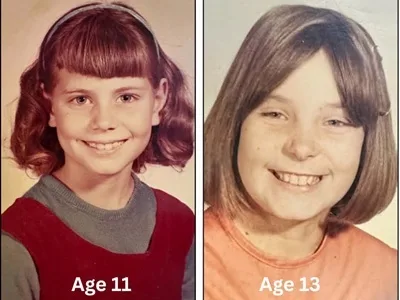
A 16-year-old murder victim who remained unidentified for nearly six decades has finally been given her name through modern forensic genetic genealogy.
For 57 years, a young woman murdered inside an Oakland, California, hotel was known only as “Jane Doe.” On October 2, 1969, Oakland police responded to the hotel after staff heard a scream from a room where the young woman was later found dead. Witnesses had reportedly seen her enter the room with a man shortly before the incident.
An autopsy determined that the victim had died from strangulation. At the time, investigators were unable to establish her identity, and she remained unidentified for decades.
The victim has now been identified as 16-year-old Joanne Yvonne Burdick, who was reportedly missing at the time of her death. The breakthrough came through a renewed investigation involving the FBI San Francisco Field Office and the Oakland Police Department, which began working together on the cold case in 2020.
Forensic Genetic Genealogy Provides the Breakthrough
Modern forensic techniques played a crucial role in solving the decades-old identity mystery. Investigators revisited evidence from the original investigation and used forensic genetic genealogy to develop potential familial connections.
The investigation eventually led authorities to Joanne Burdick’s brother. He voluntarily provided a DNA sample, and the resulting comparison helped investigators confirm that the unidentified homicide victim was, in fact, Joanne.
The development demonstrates how advances in DNA analysis and genetic genealogy can help investigators revisit evidence collected decades ago and provide answers in cases that had long remained unresolved.
The ‘Crew Cut Killer’ Connection
The investigation into Burdick’s death had previously pointed toward Taylor Morris Teaford, a fugitive who became known as the “Crew Cut Killer.”
Witnesses reportedly placed Teaford with the young woman at the hotel shortly before her death. In 1972, he was charged in connection with the murder, although he was never apprehended.
Teaford had a significant criminal history and had previously appeared on the FBI’s Ten Most Wanted Fugitives list. Investigators also considered him a person of interest in the deaths of two other women in the Bay Area in 1969.
Despite decades of investigation, his whereabouts remain unknown. Authorities are continuing to examine leads and are considering whether additional forensic techniques could help determine what happened to him.
A Cold Case Revisited Through Modern Forensics
The identification of Joanne Yvonne Burdick highlights the growing importance of forensic genetic genealogy in cold-case investigations. By combining traditional DNA analysis with genealogical research, investigators can sometimes identify victims even when conventional investigative methods have reached a dead end.
For Burdick’s family, the breakthrough finally provides an answer to a question that remained unresolved for more than half a century.
The investigation into her death, however, remains active as authorities continue searching for information about Taylor Morris Teaford and examining possible connections to other unsolved cases.
The case is a powerful reminder that advances in forensic science can give names back to unidentified victims even decades after their deaths.