
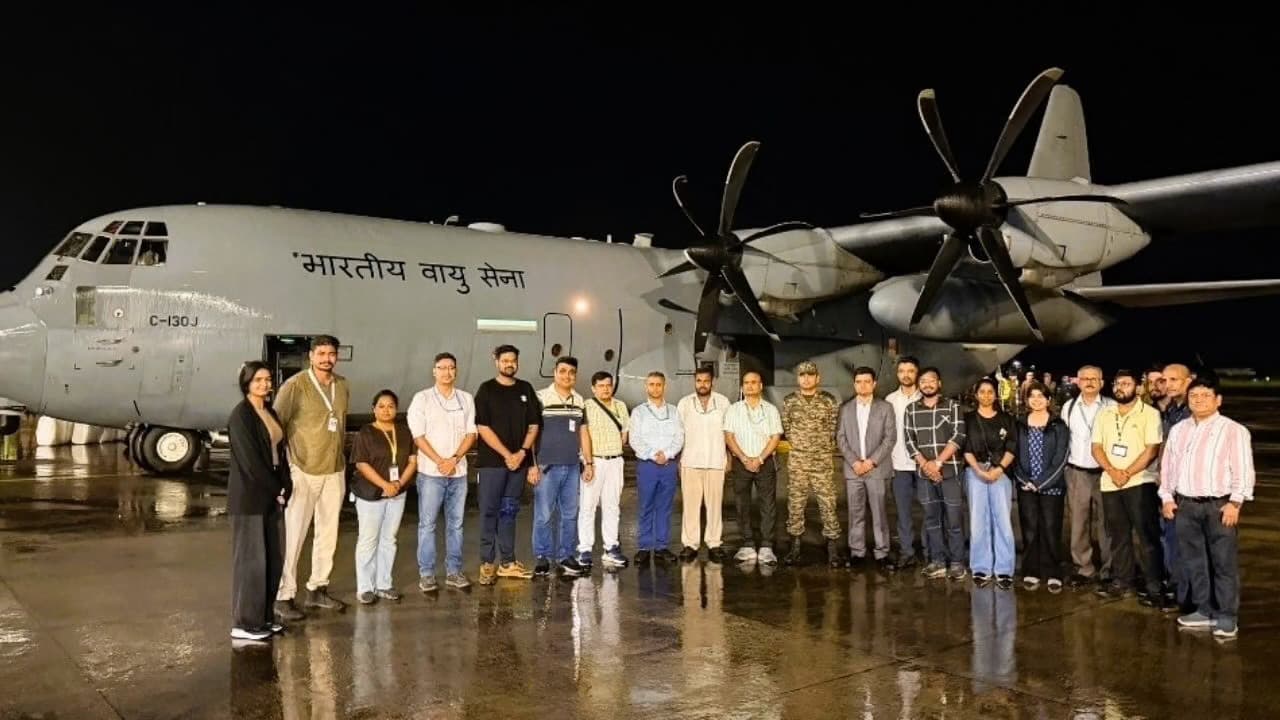
India has expanded its forensic support to Nepal by making DNA profiling facilities available to help identify people who remain missing following the devastating flash floods that struck Nepal on 26 August 2026.
Under the initiative announced by the Ministry of External Affairs, first-degree biological relatives of missing persons-including parents, children and siblings—residing in India can provide biological samples for DNA profiling. The samples can be processed at Central Forensic Science Laboratories (CFSLs), State Forensic Science Laboratories (SFSLs), laboratories of the National Forensic Sciences University (NFSU), and other NABL-accredited laboratories equipped for DNA profiling.
Autosomal STR Profiling for Victim Identification
The DNA profiling process is expected to use autosomal short tandem repeat (STR) analysis, following technical requirements communicated by the Nepal Police. The resulting DNA profiles will be compared with profiles generated from unidentified human remains recovered during the disaster.
The approach is particularly important where conventional visual identification is difficult because of decomposition, fragmentation or severe damage to human remains. Nepal is separately collecting DNA samples from relatives and profiling recovered remains as part of its disaster victim identification efforts.

Cross-Border Forensic Coordination
Once prepared, DNA profiles from relatives in India can be shared with Nepalese authorities for comparison with unidentified remains. The arrangement creates a coordinated forensic pathway between Indian laboratories, the Nepal Police and Indian diplomatic authorities.
The initiative reflects the importance of forensic DNA databases, reference samples and international cooperation in large-scale disaster victim identification (DVI).
Recent developments show the process already moving into implementation. In Maharashtra, forensic authorities reportedly generated 65 DNA profiles from relatives within 72 hours, while DNA collection has also begun for families of missing Indian tourists in other states. (
A Critical Role for Forensic Science
The Nepal disaster has created a complex victim-identification challenge, with thousands of people reported missing. As recovery operations continue, forensic science is playing a critical role in transforming unidentified remains into scientifically supported identifications.
Beyond DNA profiling, forensic identification in mass-fatality incidents can involve dental records, fingerprints, medical records and other identifying information, depending on the condition of recovered remains.
Forensic DNA analysis therefore serves not only as an investigative tool but also as an essential component of disaster victim identification and humanitarian response, helping families obtain reliable answers about missing relatives.
Forensic Perspective
The response to the Nepal floods demonstrates how DNA profiling can facilitate identification across national borders when traditional identification methods are compromised. It also highlights the importance of validated laboratory procedures, chain of custody, quality assurance and effective coordination between forensic institutions during mass-fatality events.