
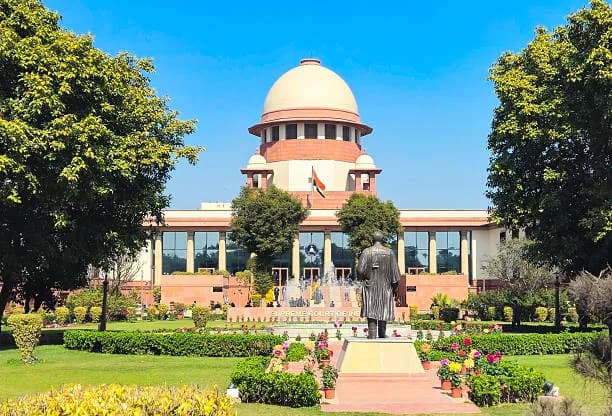
The Supreme Court of India has clarified that inappropriate corporal punishment by a teacher, without proof of sexual intent, does not constitute an offence under the Protection of Children from Sexual Offences (POCSO) Act, 2012. The ruling draws an important legal distinction between physical misconduct and sexual offences, emphasizing that every act of corporal punishment cannot automatically be prosecuted under POCSO.
Background of the case
The case arose from allegations against a school teacher who physically punished a student in a manner considered inappropriate. While the prosecution sought to invoke provisions of the POCSO Act, the central question before the Court was whether the teacher's conduct amounted to “sexual assault” as defined under Section 7 of the Act.
The Supreme Court examined whether the physical contact was accompanied by sexual intent, which is the essential ingredient required to establish an offence under POCSO.
What the Supreme Court held
The Court held that sexual intent cannot be presumed merely because there was physical contact between a teacher and a child. To attract liability under POCSO, the prosecution must prove that the act was motivated by a sexual purpose or carried a sexual character.
The bench observed that corporal punishment, however inappropriate or unlawful, belongs to a different legal category unless evidence demonstrates sexual intent. Treating every instance of physical discipline as sexual assault would expand the scope of the POCSO Act beyond the legislature's intent and could weaken its effectiveness in addressing genuine cases of child sexual abuse.
Corporal punishment remains unlawful
Importantly, the Supreme Court made it clear that the judgment does not validate or endorse corporal punishment in schools. Physical punishment of children remains prohibited under child protection and educational laws, and teachers may still face disciplinary proceedings, criminal prosecution under other applicable provisions, or action by educational authorities.
The ruling therefore limits only the applicability of the POCSO Act, not the legal consequences of unlawful corporal punishment itself.
Why this judgment matters
This decision reinforces a key principle of criminal jurisprudence: offences under special statutes such as POCSO require the prosecution to establish every essential element of the crime, particularly sexual intent. The judgment is expected to guide courts in distinguishing cases of child abuse involving sexual misconduct from those involving unlawful physical discipline, ensuring that the POCSO Act is applied consistently with its protective purpose.