
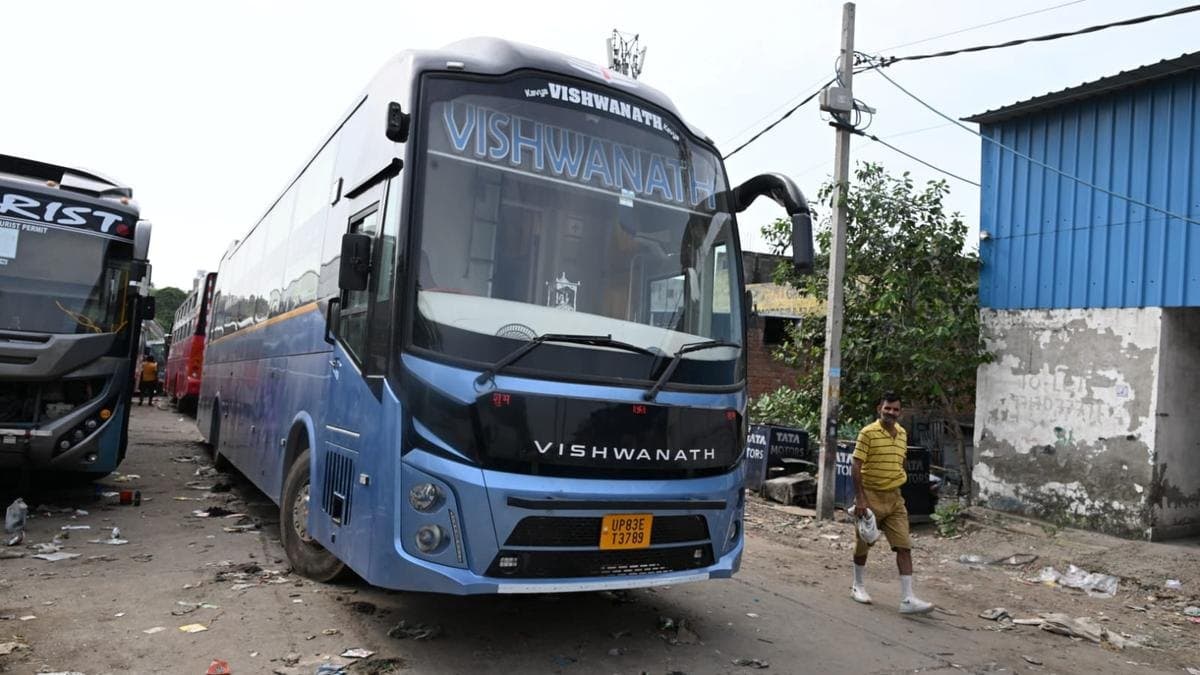
Fresh forensic findings have emerged in the alleged sexual assault of a minor inside a moving sleeper bus between Greater Noida and Delhi. Investigators have reportedly recovered fingerprints belonging to the survivor and the two arrested accused from inside the vehicle, while biological samples and the clothes of the accused have been sent for forensic examination. The DNA report is now awaited.
The case has placed forensic science at the centre of the investigation. With the CCTV camera inside the bus reportedly non-functional at the time of the alleged incident, investigators are relying on a combination of fingerprint evidence, biological examination, medical findings, CCTV footage from outside the vehicle and digital evidence to reconstruct what happened during the journey.
Fingerprints Recovered From the Sleeper Bus
One of the latest developments is the reported recovery of fingerprints of the survivor and the two accused—driver Kuldeep and conductor Sandeep from inside the sleeper bus.
Investigators have reportedly collected fingerprint evidence from the vehicle and examined areas that could help establish the movements of the individuals inside it. Samples have also been collected from the seats and steering wheel, while the clothes worn by the accused have been seized for forensic examination.
From a forensic perspective, fingerprint evidence can be valuable in establishing that a particular individual came into contact with a specific object or location. In this case, the findings can help corroborate the presence of the survivor and the accused inside the bus.
However, an important distinction must be maintained: a fingerprint establishes contact or presence, not by itself the commission of a sexual offence. Its evidentiary significance depends on where the print was found, the circumstances in which it was deposited, the condition of the scene and how it fits with the other evidence collected during the investigation.
Why the DNA Report Matters
The next major forensic development is expected to come from the DNA examination.
Police have reportedly collected biological material from the bus and other exhibits and have sought an expedited forensic examination. Reports indicate that investigators have also submitted samples including material from the vehicle and relevant clothing for laboratory analysis.
DNA profiling may help investigators determine whether biological material recovered from relevant exhibits is genetically consistent with a particular individual.
If a DNA profile is obtained from a probative biological sample and produces a reliable association with an accused, it could provide significant corroborative evidence. Conversely, the absence of a matching profile would also need to be interpreted carefully because a negative result does not automatically establish that an alleged event did not occur.
The strength of DNA evidence ultimately depends on factors such as the nature and location of the biological material, collection procedures, contamination controls, laboratory methodology, interpretation and chain of custody.
What Happened on August 4?
According to police accounts reported by multiple media organisations, the alleged incident took place on August 4, 2026.
The teenage survivor had reportedly travelled from Mainpuri in Uttar Pradesh towards Noida. During heavy rain, she got down near Pari Chowk in Greater Noida and was subsequently looking for transportation to reach her intended destination.
An empty sleeper bus stopped in the area. According to the police version reported in the media, the conductor allegedly told her that the bus was travelling towards Noida Sector 63.
The teenager subsequently boarded the vehicle.
The investigation later indicated that the bus was reportedly not operating as a normal passenger service at that time. The vehicle had earlier been taken to a workshop following a technical problem and had reportedly been collected by the driver and conductor several hours before the incident.
Alleged Assault Inside a Moving Bus
According to the survivor’s complaint and police investigation reported by the media, she has alleged that she was sexually assaulted after boarding the vehicle.
Police have reportedly stated that the alleged assault occurred while the bus was moving towards Delhi. The survivor also alleged that she was threatened when she resisted and attempted to escape.
Investigators are examining the survivor’s statement alongside physical, medical and digital evidence to establish the sequence of events.
The exact reconstruction of the journey is therefore important—not merely to determine where the bus travelled, but also to establish the movements of the occupants and identify locations where the alleged assault may have occurred.
The Bus Travelled From Greater Noida Towards Delhi
According to reports, the sleeper bus travelled from the Greater Noida area towards Delhi before the survivor was eventually abandoned near the Kashmere Gate area.
One investigation reported that the vehicle travelled approximately 47 kilometres from Greater Noida to Old Delhi without being stopped at a police checkpoint. The circumstances have prompted questions about the monitoring and enforcement of safety requirements applicable to passenger buses.
The route reconstruction has consequently become an important part of the investigation.
CCTV Inside the Bus Was Not Working
One of the most significant investigative challenges is the reported failure of the CCTV camera installed inside the bus.
The absence of functioning internal CCTV means investigators do not have a direct video recording of what allegedly occurred inside the vehicle.
However, the lack of internal footage does not mean that the investigation is without digital evidence.
Police have reportedly examined CCTV cameras installed along the route and used other information to reconstruct the bus’s movements. (The Times of India)
This illustrates an important principle of modern forensic investigation: when one source of evidence is unavailable, investigators can combine multiple independent evidence streams to reconstruct an event.
External CCTV and Mobile Data Helped Reconstruct the Route
Investigators have reportedly examined CCTV footage from locations along the bus’s route.
According to reporting, CCTV footage captured the vehicle at certain points, while mobile-phone location information associated with one of the accused was also examined.
These forms of evidence can help investigators establish a timeline and movement pattern.
For example, investigators may compare:
• CCTV timestamps; • mobile-device location information; • the suspected route of the bus; • estimated travel time; • statements of witnesses; • vehicle movements; and • forensic findings recovered from the bus.
Individually, each piece of evidence may have limitations. Together, however, they can potentially create a more coherent reconstruction of events.
Bus Recovered From Timarpur
Following the complaint, Delhi Police reportedly traced the vehicle to a parking area in Timarpur, where the two accused were arrested.
The bus was subsequently seized and subjected to forensic examination.
The seizure of the vehicle was particularly significant because it preserved the alleged crime scene as a physical source of evidence.
Investigators could therefore examine surfaces, seats and other areas for fingerprints, biological material and other trace evidence.
Clothes of the Accused Sent for Examination
Police have reportedly seized the clothes worn by the accused at the time of the alleged incident.
Clothing can be an important forensic exhibit in sexual-offence investigations because it may potentially contain biological or trace evidence.
The evidentiary value of such material depends heavily on proper collection, packaging, preservation and laboratory examination.
Investigators must also maintain a documented chain of custody from the moment an exhibit is seized until it reaches the forensic laboratory and is subsequently produced as evidence.
Forensic Examination of the Seats and Steering Wheel
The seats and steering wheel of the bus have reportedly been examined for forensic evidence.
These locations may help investigators reconstruct contact and movement within the vehicle.
Fingerprint examination can potentially establish contact with a surface, while biological examination may identify material relevant to the allegations.
The forensic interpretation, however, must consider the possibility of innocent transfer or prior contact. A vehicle is not necessarily a pristine crime scene: drivers, conductors, mechanics and other individuals may have touched various surfaces before the vehicle was seized.
Consequently, the context and location of every forensic finding are crucial.
What Can Fingerprint Evidence Establish?
The reported fingerprint findings are important, but they should not be overstated.
A fingerprint comparison can potentially establish that a particular person deposited a fingerprint on a particular surface.
In this case, fingerprints belonging to the survivor and the two accused reportedly being found inside the bus are consistent with their presence in the vehicle. (The Times of India)
But the more important forensic question is not simply:
“Whose fingerprint is this?”
It is also:
“Where was it found, when could it have been deposited, and what does its location mean in the context of the alleged incident?”
That distinction is essential when interpreting forensic evidence.
DNA Could Provide Additional Corroboration
DNA evidence is potentially more probative when the biological material is recovered from a location or exhibit directly connected with the allegation.
The investigation reportedly involves biological samples, including material described in media reports as semen and hair strands, which have been sent for forensic examination. (The Indian Express)
The laboratory’s findings may help investigators determine whether relevant biological material is genetically consistent with the accused or another individual.
Nevertheless, DNA evidence should be interpreted alongside the circumstances in which the biological material was recovered.
A forensic laboratory does not determine guilt or innocence. Its role is to analyse submitted exhibits and provide scientific findings. The ultimate assessment of the evidence belongs to the court.
Medical and Forensic Evidence Will Need to Be Correlated
The investigation is not dependent on a single forensic technique.
The survivor’s statement, medical examination, fingerprint evidence, biological evidence, DNA findings, CCTV footage, mobile-location information and other investigative material may all form part of the evidentiary picture.
The strength of the prosecution case will depend on how consistently these different sources support or contradict one another.
This is particularly important in sexual-offence investigations, where investigators must avoid treating the absence of one particular type of forensic evidence as automatically decisive.
Accused Underwent Medical Examination
The two accused have reportedly undergone medical examinations as part of the investigation.
Reports have also referred to potency testing.
Such examinations form part of the broader medico-legal investigation and must be interpreted within their proper scientific and legal limitations.
The presence or absence of a particular medical finding cannot, by itself, determine whether a sexual offence occurred. It must be assessed along with the totality of evidence.
Two Accused Arrested
The accused have been identified as Kuldeep, the driver, and Sandeep, the conductor.
Both were reportedly arrested after police traced the bus to Timarpur.
The investigation is now focused on collecting and analysing evidence that can establish the sequence of events and determine whether the allegations are corroborated by independent evidence.
The accused remain entitled to the presumption of innocence unless and until guilt is established through the judicial process.
Questions About Bus Safety
Beyond the criminal investigation, the incident has raised broader questions concerning the safety of private sleeper buses.
Reports have highlighted concerns about the absence of functioning internal CCTV, the circumstances in which the empty bus was operating and the monitoring of passenger vehicles.
The case has therefore renewed discussion about mechanisms such as:
• functioning CCTV systems; • verification of drivers and conductors; • passenger records; • route monitoring; • emergency communication systems; • regular vehicle inspections; and • mechanisms for reporting suspicious activity.
The issue is particularly important for women, children and other vulnerable passengers travelling alone.
NHRC Takes Cognisance
The case has also attracted institutional scrutiny.
The National Human Rights Commission (NHRC) has taken cognisance of the reported incident and issued notices to police authorities in Delhi and Gautam Buddh Nagar, seeking information regarding the investigation and action taken.
The intervention reflects the wider public concern surrounding the alleged offence and the need for an effective investigation.
The Importance of Scene Preservation
From a forensic perspective, one of the most important aspects of the case is the preservation and examination of the bus.
Once investigators suspected that the vehicle itself could contain relevant evidence, securing it became critical.
Every additional person entering the vehicle creates a potential risk of introducing new fingerprints, DNA or trace material.
Therefore, crime-scene management—including documentation, photography, systematic searching, appropriate collection techniques and chain-of-custody procedures—is fundamental to the reliability of subsequent forensic findings.
From Fingerprints to DNA: Building an Evidentiary Chain
The investigation demonstrates how modern criminal investigations increasingly rely on multiple forensic and digital evidence streams rather than a single “smoking gun.”
The reported evidence can broadly be divided into several categories:
-
Fingerprint evidence Used to associate individuals with surfaces inside the vehicle.
-
Biological evidence Collected from relevant areas and exhibits for laboratory examination.
-
DNA profiling Potentially useful for determining genetic associations between biological material and reference samples.
-
Medical evidence Relevant to the medico-legal investigation.
-
CCTV evidence Used to reconstruct the movement of the bus and potentially identify relevant events outside the vehicle.
-
Mobile-location evidence Potentially useful for corroborating the movement of individuals and the vehicle.
-
Witness and survivor statements Important for establishing the narrative and sequence of events.
The investigative value lies in the corroboration between these different forms of evidence.
What Happens Next?
The immediate focus is expected to remain on the forensic laboratory’s examination of the biological samples.
Investigators are reportedly seeking an expedited report so that the findings can be incorporated into the case file and eventual chargesheet.
Once the DNA and other forensic reports are received, investigators will be able to assess whether the laboratory findings support the allegations and how they interact with the other evidence already collected.
The police are also expected to continue analysing CCTV footage, digital-location information, witness statements and the results of medical examinations.
Why This Case Matters for Forensic Investigation
The case highlights an important reality of forensic science: physical evidence rarely speaks for itself.
A fingerprint may establish contact. DNA may establish a genetic association. CCTV may establish movement. Mobile data may establish location. Medical examination may provide additional findings.
But the scientific value of each piece of evidence depends on its collection, preservation, examination and interpretation.
The investigation therefore illustrates the importance of an integrated forensic approach, in which different evidence sources are independently evaluated and then assessed collectively.
Investigation Remains Underway
The reported recovery of fingerprints from the sleeper bus represents a significant development in the investigation, particularly because the internal CCTV system was reportedly not functioning.
However, the fingerprint findings primarily address the presence or contact of the individuals with the vehicle. They do not, by themselves, establish the alleged sexual assault.
The pending DNA examination could provide additional scientific evidence, while CCTV footage, mobile-location data, medical findings, witness accounts and other material will continue to contribute to the reconstruction of events.
Ultimately, the evidentiary significance of each forensic finding will depend on the complete investigation and its assessment during judicial proceedings.
For now, investigators are awaiting the DNA report as they work towards completing the case and preparing the chargesheet.