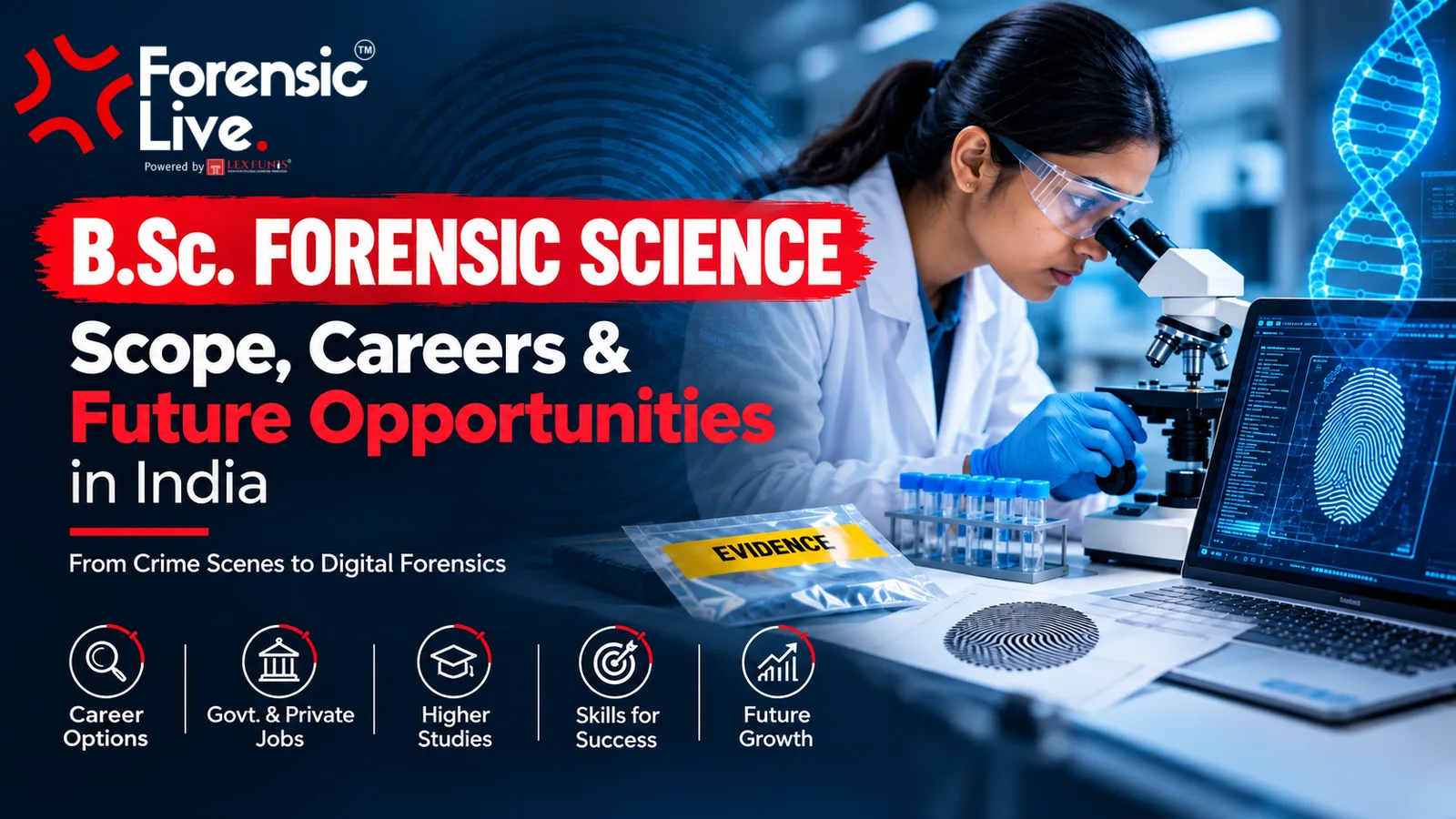
Can science help solve a crime?
From DNA and fingerprints to mobile phones, CCTV footage and digital evidence, modern investigations increasingly depend on scientific techniques. This is where forensic science comes in.
For students fascinated by crime investigation, science, law and technology, a B.Sc. in Forensic Science can open the door to a wide range of career and higher-education opportunities.
But what can you actually do after completing the degree? Which forensic fields are growing? Can a forensic science graduate work in cybercrime or digital forensics?
What is Forensic Science?
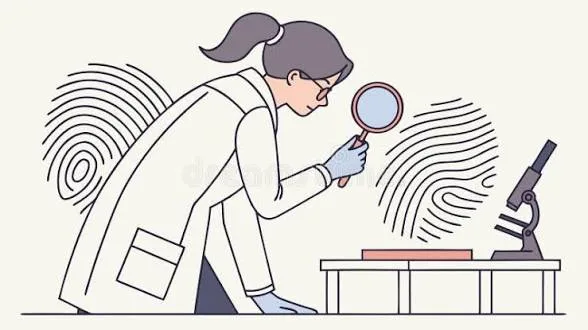 Forensic science is the application of scientific principles and techniques to the investigation of crime and legal matters.
A forensic professional may examine evidence such as:
- DNA and biological samples Fingerprints
- Blood and other bodily fluids
- Drugs and toxic substances
- Documents and handwriting
- Firearms and ballistic evidence
- Trace evidence
- Digital devices and electronic data
- Crime-scene evidence
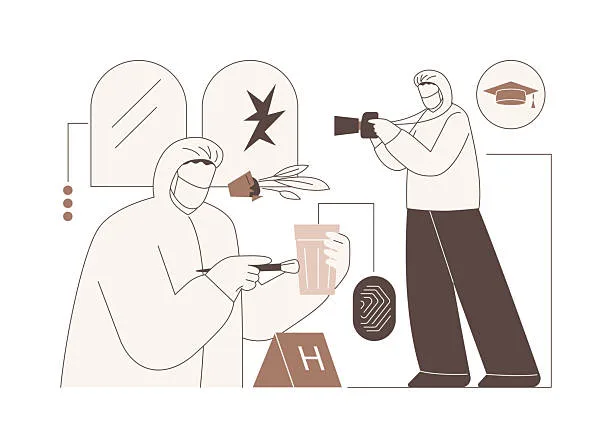 The objective is not simply to “solve crimes”, but to scientifically examine, document and interpret evidence so that it can assist an investigation or judicial proceeding.
What Do You Study in a B.Sc. Forensic Science?
A B.Sc. Forensic Science programme generally combines concepts from science, investigation and forensic examination.
Depending on the university and curriculum, students may encounter subjects such as:
- Forensic Biology
- Forensic Chemistry
- Forensic Physics
- Criminalistics
- Toxicology
- DNA and Serology
- Fingerprint Science
- Questioned Documents
- Crime Scene Investigation
- Ballistics
- Forensic Psychology
- Digital Forensics
- Cybercrime Investigation
This multidisciplinary nature is one of the major attractions of the field.
Where Can a Forensic Science Graduate Work?
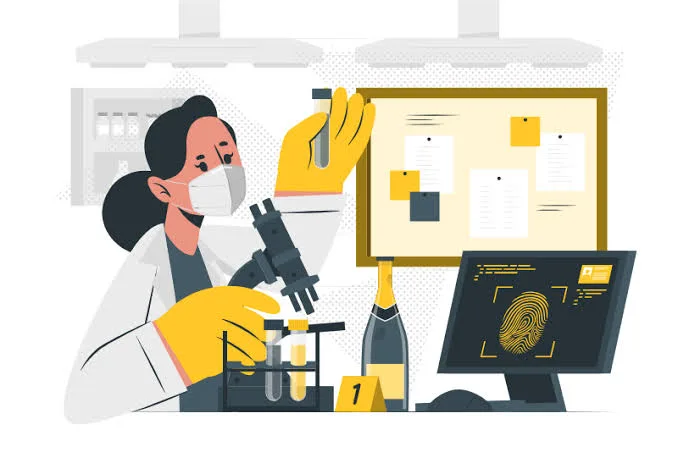 The career path after a B.Sc. in Forensic Science is not limited to one job title.
Your opportunities can depend heavily on your specialisation, practical skills, higher qualifications and recruitment requirements.
1. Forensic Science Laboratories
Forensic laboratories examine evidence submitted by investigating agencies and other authorities.
Depending on their specialisation, professionals may work with biological, chemical, toxicological, physical or other forms of forensic evidence.
2. Crime Scene Investigation
Ever wondered what happens at a crime scene before the evidence reaches a laboratory?
Crime-scene professionals may assist with documenting the scene, identifying potential evidence, collecting and packaging exhibits and maintaining proper records.
Accuracy is critical because improper collection or documentation can affect the evidentiary value of material.
3. Digital Forensics
This is one of the most technology-driven areas of modern forensic investigation.
Digital forensic professionals may examine:
- Mobile phones
- Computers
- Hard drives
- Cloud data
- Emails
- Social-media evidence
- Digital photographs and videos
- Other electronic devices
With technology becoming part of everyday life, digital evidence has become increasingly relevant to investigations.
Students interested in forensic science + technology can therefore explore digital forensics and related cybersecurity fields through appropriate higher education and specialised training.
4. DNA and Forensic Biology
DNA evidence has become one of the most recognised areas of forensic science.
Professionals in forensic biology may examine biological samples and assist with DNA-based identification and comparison, subject to the procedures and standards applicable to the relevant laboratory.
Students interested in biology and laboratory science may find this a particularly relevant specialisation.
5. Toxicology
Forensic toxicology deals with the detection and interpretation of drugs, alcohol, poisons and other potentially harmful substances in biological samples.
It can play an important role in investigations involving suspected poisoning, intoxication and unexplained deaths.
6. Questioned Documents
A signature, handwriting sample or suspicious document can sometimes become an important piece of evidence.
Forensic document examination can involve the examination of handwriting, signatures, alterations, printing and other characteristics of questioned documents.
7. Forensic Psychology
Forensic psychology sits at the intersection of psychology and the legal system.
Students interested in human behaviour, psychology and criminal justice can explore this area through appropriate specialised education.
8. Forensic Accounting and Fraud Investigation
Not every crime leaves behind blood, fingerprints or DNA.
Financial crimes can leave behind transactions, accounting records, digital trails and other financial evidence.
Forensic accounting combines accounting knowledge with investigative techniques to examine suspected financial irregularities, fraud and financial disputes.
Government Jobs in Forensic Science
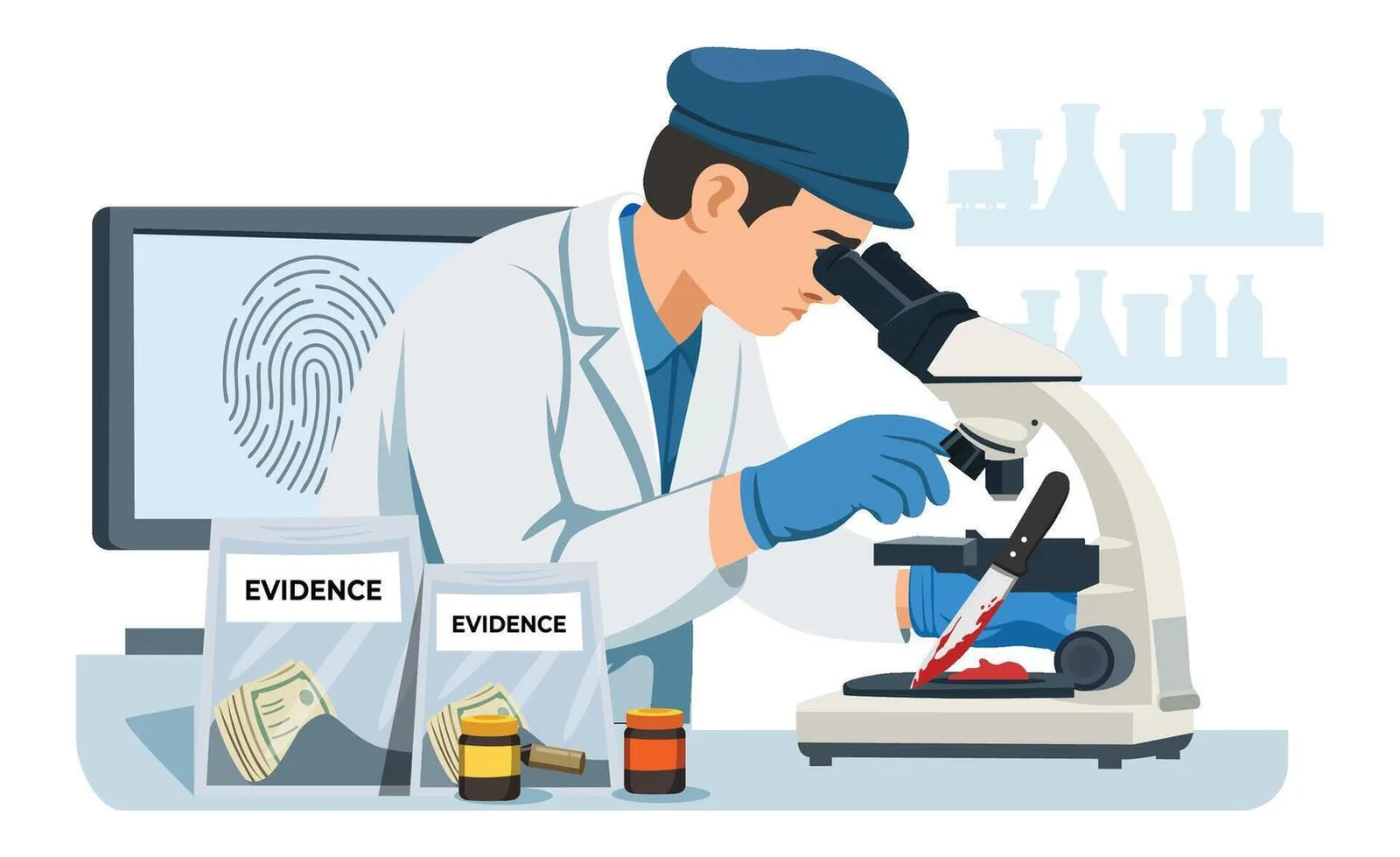 Government organisations and forensic laboratories are among the career avenues that forensic science graduates may explore.
Depending on the organisation and recruitment notification, opportunities may arise in areas associated with:
- Forensic science laboratories
- Law-enforcement agencies
- Scientific investigation
- Crime-scene examination
- Cybercrime investigation
- Government research organisations
- Other investigative and scientific institutions
However, eligibility differs from one post to another. Some positions may require a postgraduate degree, specific subject combinations, experience or additional qualifications.
Therefore, students should always check the latest official recruitment notification before applying.
What About Private-Sector Careers?
The private sector is another potential career route.
As organisations increasingly deal with cyber incidents, financial fraud, data breaches and internal investigations, professionals with relevant forensic and technical skills may find opportunities in areas such as:
- Digital forensics
- Cybersecurity
- Corporate investigations
- Fraud investigation
- Forensic consultancy
- Litigation support
- Insurance investigations
- Private investigation
- Risk and compliance-related functions
The exact role and eligibility will depend on the employer and the candidate’s qualifications.
The Rise of Digital Forensics and Cybersecurity
 Imagine a criminal investigation where the most important evidence is not found at the crime scene—but inside a smartphone.
That is increasingly the reality of modern investigations.
Messages, photographs, location information, browser activity, emails and other digital traces can potentially become relevant evidence. As a result, digital forensics has emerged as an important specialised area within the broader forensic and investigative ecosystem.
Forensic science students who are interested in technology can consider developing skills in:
- Mobile forensics
- Computer forensics
- Network forensics
- Cybercrime investigation
- Digital evidence handling
- Incident response
- Cybersecurity fundamentals
Combining forensic knowledge with technical skills can create additional pathways for students interested in technology-driven investigations.
What Skills Should a Forensic Science Student Develop?
A degree is only one part of building a forensic career.
Students should also focus on developing practical and professional skills.
Scientific Thinking
Forensic work requires evidence-based reasoning rather than assumptions.
Attention to Detail
Small observations can sometimes have significant investigative importance.
Documentation
Evidence collection, handling and examination require accurate documentation.
Analytical Skills
Forensic professionals need to interpret information systematically and understand the limitations of their findings.
Technical Skills
Knowledge of laboratory techniques, forensic instruments or digital forensic tools can be valuable depending on the chosen specialisation.
Communication
A forensic professional must be able to explain technical findings clearly through reports and, where required, professional testimony.
Ethics
Forensic science directly interacts with investigations and the justice system. Maintaining professional integrity and following appropriate procedures is therefore essential.
Is B.Sc. Forensic Science Enough?
It can be a starting point—but your career does not necessarily have to stop with a bachelor’s degree.
After completing B.Sc. Forensic Science, students may consider postgraduate education or specialised training in areas such as:
- M.Sc. Forensic Science
- Digital Forensics
- Cybersecurity
- Forensic Biology
- Forensic Chemistry
- Toxicology
- Forensic Psychology
- Criminalistics
- Cybercrime Investigation
- Other specialised forensic disciplines
Internships, laboratory exposure, research projects, workshops and relevant certifications can also help students understand the practical side of the profession.
What Does the Future of Forensic Science Look Like?
 Forensic science is changing alongside technology.
Traditional evidence such as fingerprints, biological samples and questioned documents continues to be important, while newer forms of evidence including digital and electronic evidence are becoming increasingly relevant.
Artificial intelligence, advanced analytical techniques, improved laboratory technologies and the growing volume of digital information are also influencing how evidence can be examined.
This means future forensic professionals may need to understand both science and technology.
Who Should Choose Forensic Science?
 B.Sc. Forensic Science may be worth exploring if you are interested in:
- Science and laboratory work
- Crime investigation
- Criminal justice
- Evidence analysis
- Biology or chemistry
- Technology and cybercrime
- Digital investigations
- Research
- The intersection of science and law
However, students should understand that forensic science is not simply about dramatic crime-scene investigations shown in movies and television.
Real forensic work often involves careful laboratory analysis, documentation, quality procedures, research and patience.
Final Takeaway
A B.Sc. in Forensic Science can be the beginning of a diverse career journey, rather than a qualification leading to just one type of job.
From forensic laboratories and crime-scene investigation to DNA analysis, toxicology, digital forensics and fraud investigation, students can explore different directions based on their interests and further qualifications.
The most important step is to identify the area that interests you and start building relevant scientific, technical and practical skills early.
Forensic science is evolving—and the professionals entering the field today may find themselves working at the intersection of science, technology, investigation and justice.