
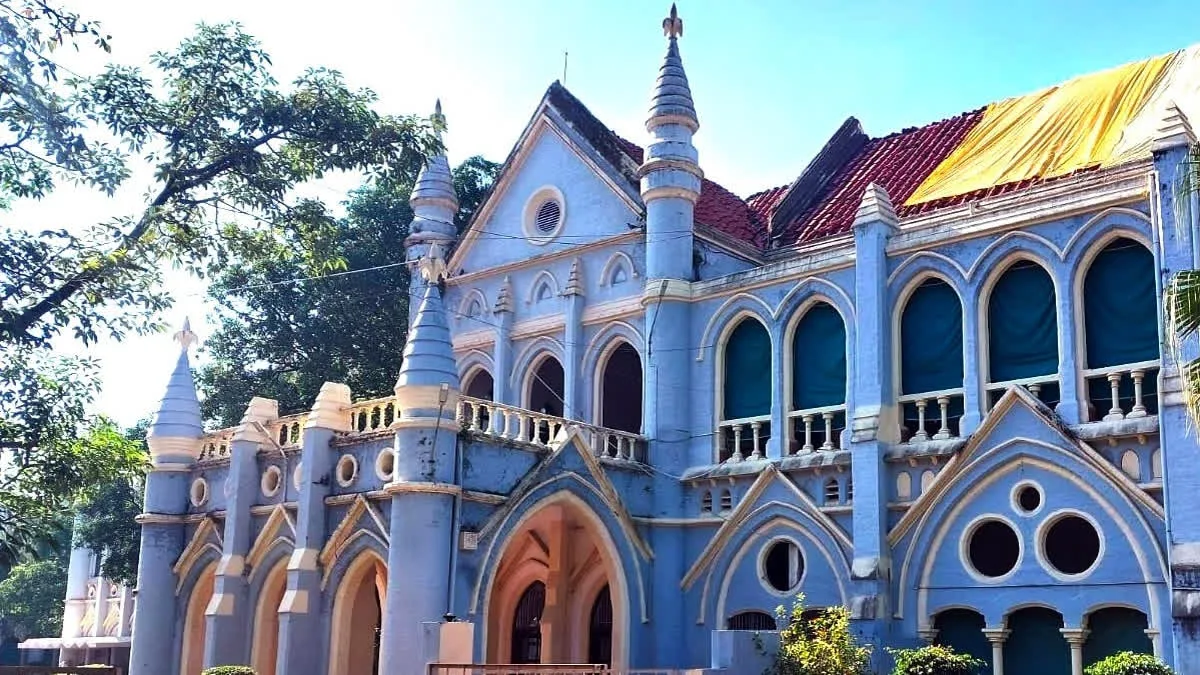
The Madhya Pradesh High Court has upheld an order directing further investigation and fresh voice sample collection of a police officer accused of demanding a bribe, observing that an inconclusive forensic report cannot, by itself, establish that no offence has been committed.
A Division Bench comprising Justice Anand Pathak and Justice Deepak Khot dismissed a petition filed by Sanjay Sisodiya, an Assistant Sub-Inspector (ASI), challenging the rejection of a closure report by the Special Judge under the Prevention of Corruption Act, Bhopal.
Background of the Case
The case originated from a complaint filed by Karan Gurjar, who alleged that his landlord, Syed Noman Hussain, had unlawfully evicted him from rented hotel premises and retained certain belongings. Following the complaint, a case under Section 420 of the Indian Penal Code was registered against the landlord.
Sisodiya, who was investigating the matter, was subsequently accused of demanding ₹30,000 from the complainant as illegal gratification. The complainant approached the Deputy Superintendent of Police (DySP), following which a digital voice recorder was provided to him to record conversations concerning the alleged bribe demand.
According to the prosecution, the complainant subsequently recorded a conversation in which the officer allegedly demanded ₹10,000 to be paid immediately, with the remaining amount to be paid within two to three days.
An FIR was registered against the officer under Section 7 of the Prevention of Corruption Act, 1988. However, despite multiple attempts, the trap proceedings could not be completed as the officer was not found at the police station premises.
Forensic Examination and Closure Report
During the investigation, voice samples of the accused officer and the complainant, along with the questioned voice recording, were sent to the Regional Forensic Science Laboratory (RFSL), Bhopal, for examination.
The forensic laboratory could not provide a conclusive opinion regarding voice comparison due to insufficient speech data, inappropriate samples and significant intra-speaker variations. The report also indicated the possibility of deliberate voice disguise.
Relying on the absence of a direct or indirect bribe demand in the transcript and the inconclusive forensic findings, the investigating agency submitted a closure report on March 12, 2026.
However, the Special Judge (PC Act), Bhopal, rejected the closure report and directed further investigation, including the collection of fresh voice samples from the accused officer for renewed forensic examination.
High Court's Observations on Forensic Evidence
Challenging the order, the petitioner argued that fresh voice sample collection would violate the protection against self-incrimination under Article 20(3) of the Constitution. He also contended that the recorded conversation did not establish any clear demand or acceptance of illegal gratification.
The High Court, however, found that the RFSL had not declared the questioned voice and the accused's sample voice to be mismatched. Rather, the laboratory had expressed its inability to provide an opinion because the samples were inappropriate and insufficient for scientific comparison.
The Bench observed that an inconclusive forensic report cannot be treated as evidence establishing the absence of an offence.
The Court further noted that the transcript prima facie indicated a demand for illegal gratification. Referring to the explanation under Section 7 of the Prevention of Corruption Act, the Bench observed that even an attempt to obtain gratification constitutes an offence.
The Court also reiterated that a Magistrate is empowered to direct further investigation when the investigation conducted by the police is found to be faulty or insufficient.
Final Decision
Rejecting the petitioner's challenge, the Madhya Pradesh High Court held that the Special Judge had committed no illegality or jurisdictional error in rejecting the closure report and directing further investigation with fresh voice sample collection.
Accordingly, the petition was dismissed.
-
Case: Sanjay Sisodiya v. The State of Madhya Pradesh
-
Citation: 2026:MPHC-JBP:85170
-
Court: Madhya Pradesh High Court, Jabalpur
-
Bench: Justice Anand Pathak and Justice Deepak Khot