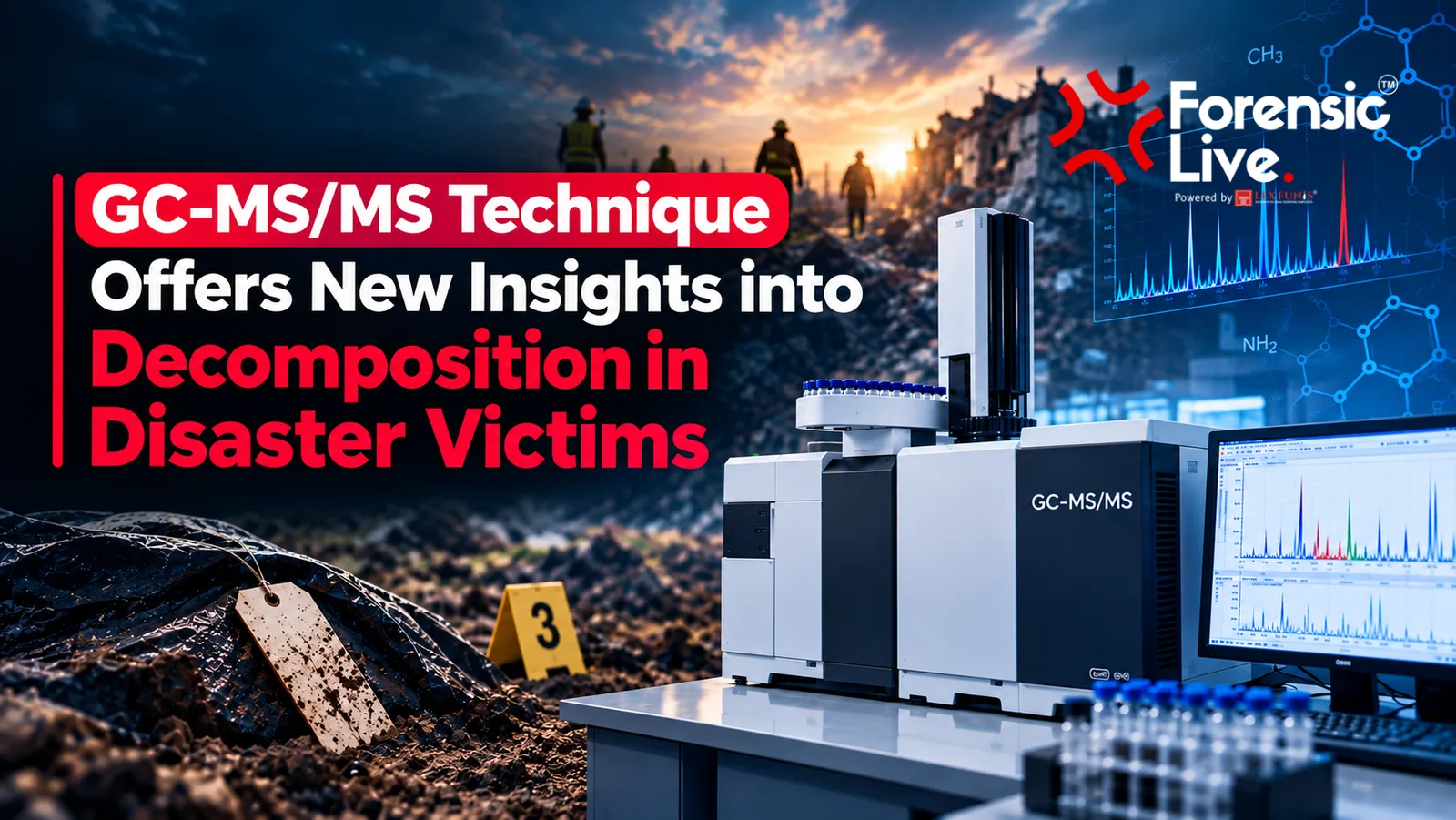
Researchers have investigated how human remains decompose in disaster environments and how the presence of multiple bodies may influence the decomposition process. The study used an advanced analytical technique known as gas chromatography–tandem mass spectrometry (GC-MS/MS) to examine chemical changes associated with decomposition.
The findings could contribute to a better understanding of decomposition in mass-fatality incidents and potentially support Disaster Victim Identification (DVI) efforts.
Why Decomposition in Disaster Environments Matters
Identifying victims after disasters can be extremely challenging. Bodies may be trapped beneath collapsed structures, exposed to changing environmental conditions, or become commingled with other remains.
Temperature, humidity, airflow, soil conditions and access by insects and microorganisms can all influence decomposition. When several bodies are located together, the surrounding environment may change further, potentially affecting the decomposition process.
Understanding these changes is important for forensic investigators who must recover, examine and identify victims in complex disaster scenes.
Researchers Simulated Disaster Conditions
Researchers from Australia and the Netherlands studied donated human bodies placed beneath rubble to simulate conditions that may occur during disaster events.
Some of the bodies were positioned individually, while others were placed in groups. This allowed researchers to investigate whether the presence of multiple bodies influenced decomposition.
The researchers used GC-MS/MS with multiple reaction monitoring to analyse chemical compounds associated with the breakdown of human tissue.
What Is GC-MS/MS?
Gas chromatography–tandem mass spectrometry is a powerful analytical technique widely used in forensic science.
Gas chromatography separates chemical compounds within a sample. Mass spectrometry then helps identify and measure those compounds based on their molecular characteristics.
In decomposition research, this approach can be used to detect and measure chemical changes that occur as biological tissues break down.
Different Decomposition Patterns Observed
The researchers observed changes in lipid-related compounds as decomposition progressed.
After approximately two weeks, remains positioned in groups showed higher levels of certain lipid degradation signals compared with bodies that had been positioned individually.
The observation suggests that the presence of other bodies may influence the local environment and consequently affect the chemical progression of decomposition.
Potential Importance for Disaster Victim Identification
The findings may have implications for forensic teams working on mass-fatality investigations.
A better understanding of decomposition under disaster conditions could potentially assist investigators in:
- Assessing decomposition patterns
- Selecting appropriate identification methods
- Understanding postmortem chemical changes
- Improving recovery and preservation strategies
- Interpreting remains recovered from complex environments
- Developing additional scientific indicators for forensic examination
However, further research is required before chemical markers can be routinely applied to real-world disaster investigations.
The Growing Role of Analytical Chemistry in Forensics
The study highlights how analytical chemistry and advanced mass-spectrometry techniques are expanding the capabilities of forensic science.
Traditional examination of remains often relies on visual, anthropological and pathological observations. Chemical analysis can provide another layer of information by detecting molecular changes that may not be visible during examination.
GC-MS/MS could therefore become an important research tool for studying decomposition and understanding how environmental conditions influence postmortem changes.
What This Means for Forensic Science
Mass-fatality incidents create some of the most challenging circumstances for forensic investigators. Remains may be fragmented, commingled, buried beneath debris or exposed to unpredictable environmental conditions.
Research into the chemical processes of decomposition can help scientists better understand these complex situations and potentially contribute to improved approaches to Disaster Victim Identification.
The study demonstrates how advanced analytical techniques can provide valuable insights into decomposition and may support the development of more scientifically informed forensic approaches for future disaster investigations.