
The Investigation and Forensic Evidence
1. Collection of biological and physical evidence Following the reported assault, investigators collected biological material through a sexual assault evidence kit. The victim’s clothing and hair evidence recovered from her car were also retained.
Such exhibits can provide scientifically testable material that may help establish or exclude a person’s involvement in a sexual offence. However, their evidentiary value depends on appropriate collection, preservation, laboratory examination, and interpretation.
In Butler’s case, these materials assumed particular importance because the conviction relied heavily on eyewitness identification. Their later examination offered an opportunity to test the prosecution’s case against objective biological evidence.
2. Delayed access to DNA testing
Butler repeatedly sought forensic testing of the evidence after his conviction. His requests were unsuccessful for years. Centurion Ministries began working on the case in 1995 and helped arrange legal representation and renewed efforts to obtain testing.
Although prosecutors agreed to testing in June 1997, the judicial order authorising it was not signed until April 1998. The delay illustrates a central problem in post-conviction justice: potentially exculpatory evidence may remain unexamined even when a convicted person consistently maintains innocence.
3. Initial DNA testing proved inconclusive
On 5 January 1999, Cellmark Diagnostics reported that its examination of a slide from the sexual assault evidence kit did not produce sufficient information to determine whether Butler could be excluded as the source of the semen.
An inconclusive result is not equivalent to either an inclusion or an exclusion. It means that the available analysis has not resolved the relevant question. The evidence therefore required further examination using an appropriate method.
4. Y-chromosome DNA analysis excluded Butler
The evidence was subsequently sent to the Office of the Chief Medical Examiner in New York City, where Y-chromosome testing had been developed to help isolate and examine male DNA in relevant samples.
On 26 February 1999, the laboratory reported that the results excluded Butler as the source of the semen recovered in the sexual assault evidence kit.
Y-chromosome testing examines genetic markers on the Y chromosome and can be particularly useful when male DNA must be evaluated in a sample containing biological material from more than one individual. Its results must nevertheless be interpreted in light of the method used, the nature of the sample, and the limitations of the evidence.
The findings were subsequently submitted to Bio-Synthesis, Inc., in Lewisville, Texas, for confirmation. On 26 August 1999, the laboratory confirmed the findings from New York.
5. Further testing strengthened the findings
On 12 November 1999, the Texas Department of Public Safety crime laboratory reported that Butler was not the source of the semen stains found on the victim’s skirt. The laboratory also excluded him as the source of the hair evidence recovered from the victim’s car.
The significance of these results lay in the convergence of findings from different exhibits and laboratories. The forensic evidence no longer merely failed to establish Butler’s involvement; it affirmatively excluded him as the source of the tested biological material.
These findings provided compelling scientific grounds for challenging the conviction and seeking relief.
From Wrongful Conviction to Exoneration
The DNA findings fundamentally changed the position of the case. In light of the results, the prosecution joined Butler’s attorney in seeking clemency.
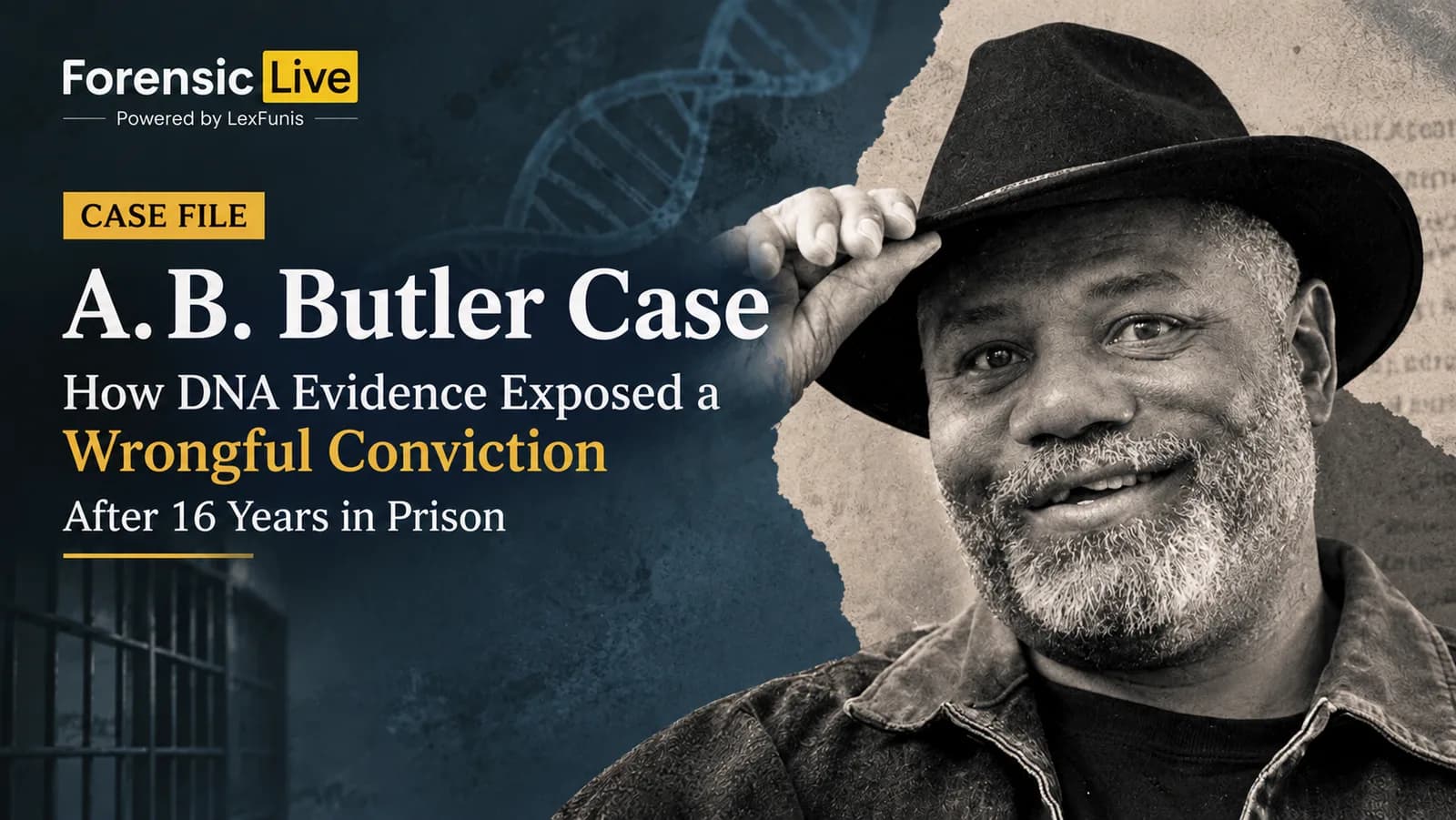
Butler was released from prison on 7 January 2000 after serving approximately 16.5 years. On 31 May 2000, Texas Governor George W. Bush granted him a pardon on grounds of actual innocence.
In 2001, Butler received state compensation reported by the Innocence Project as $27,854, together with a monthly annuity of $7,100. His subsequent federal civil rights lawsuit was dismissed.
The outcome demonstrated that a conviction based substantially on eyewitness identification could be overturned when later scientific examination of preserved evidence contradicted the case against the accused.
Why Was the Eyewitness Identification Problematic?
Eyewitness identification was the principal contributing factor identified in Butler’s wrongful conviction. The victim identified him through photographs, a live lineup, and at trial. Repeated identification, however, does not independently establish that the identification is accurate, particularly when the procedures or circumstances surrounding the identification may affect reliability.
The Innocence Project has also reported that the victim did not mention Butler’s prominent missing front tooth in her initial description of the perpetrator, despite Butler having lacked that tooth since childhood. This discrepancy illustrates why investigators and courts should compare an identification with the original description and other independently verifiable evidence.
Cross-racial identification is another relevant consideration in this case. Research has found that people can have greater difficulty accurately identifying faces belonging to racial groups different from their own. This is a general evidentiary concern, not proof by itself that a particular identification is mistaken.
The broader lesson is that identification evidence must be assessed critically rather than treated as conclusive simply because a witness expresses confidence or repeats an identification on several occasions.
Significance for Forensic Science
The A.B. Butler case offers several important lessons for forensic science students, practitioners, investigators, and legal professionals.
1. DNA evidence can correct wrongful convictions. Biological evidence preserved from an investigation may permit later scientific testing capable of excluding a person who was previously convicted.
2. Scientific exclusion is evidentially significant. Forensic analysis is not limited to identifying a suspect. Properly conducted testing can also demonstrate that a suspect is not the source of biological material associated with an offence.
3. Advances in forensic technology matter. The initial testing in Butler’s case was inconclusive, while subsequent Y-chromosome analysis produced an exclusion. The case demonstrates how developments in analytical methods can change what can reliably be inferred from previously collected evidence.
4. Evidence preservation is essential. The possibility of future testing depends on retaining biological and physical exhibits in suitable conditions, with appropriate documentation and safeguards against contamination or loss.
5. Eyewitness evidence requires careful scrutiny. Investigators and courts should examine the original description, identification procedures, inconsistencies, viewing conditions, and other factors affecting reliability.
6. Access to post-conviction testing is important. Meaningful procedures for reviewing preserved evidence can help identify wrongful convictions, particularly where scientific methods have improved since the original trial.
7. Forensic evidence must be evaluated objectively. Scientific results should be interpreted in context, with attention to their limitations. Forensic science should assist the search for truth rather than simply reinforce an existing investigative theory.
Conclusion
The A.B. Butler case remains a powerful illustration of the relationship between forensic science and the administration of criminal justice. Convicted in 1983 and sentenced to 99 years in prison, Butler spent more than 16 years incarcerated before DNA testing excluded him as the source of the biological evidence examined in the case. His release in January 2000 and pardon in May 2000 marked the culmination of years of efforts to obtain scientific testing.
For forensic professionals, the case reinforces the importance of preserving evidence, selecting appropriate analytical methods, documenting results, and communicating scientific conclusions accurately. For legal professionals, it demonstrates why eyewitness identification must be assessed alongside independent evidence and why access to post-conviction forensic examination is an important safeguard.
Ultimately, the purpose of forensic science is not merely to support a prosecution or secure a conviction. It is to provide reliable, impartial scientific information that helps the justice system distinguish guilt from innocence.