
Introduction
The criminal justice system relies on evidence to reconstruct what happened at a crime scene. But what happens when the initial interpretation of a crime scene is wrong, and subsequent testimony is built around that mistake? The case of Termaine Hicks is a striking example of how eyewitness uncertainty, police testimony, undisclosed surveillance evidence, forensic interpretation and later scientific examination can intersect in a wrongful conviction.
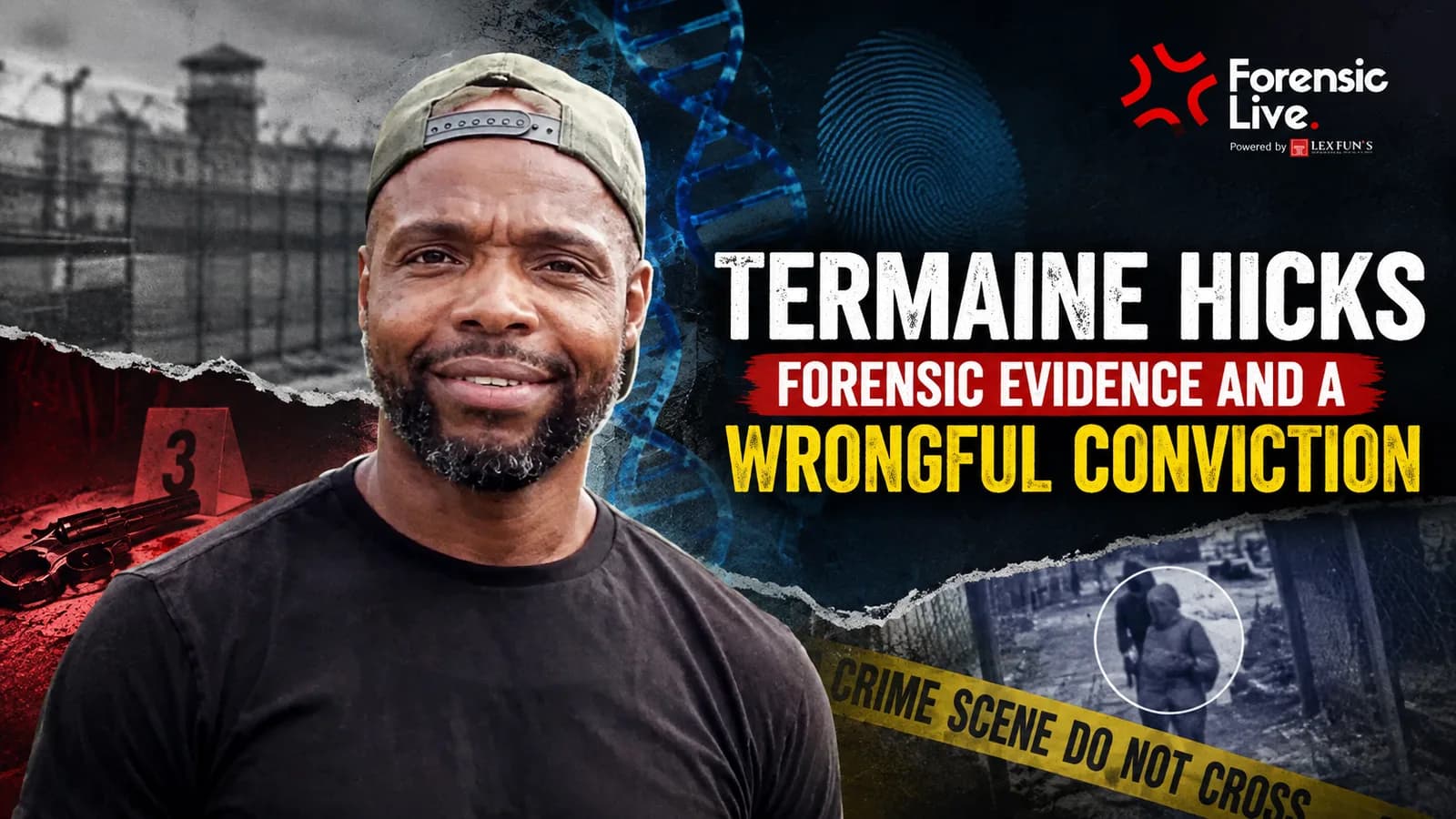
Hicks was convicted in Philadelphia in 2002 for rape, aggravated assault, possession of an instrument of crime and terroristic threats. He maintained that he had not committed the assault and had actually encountered the victim after hearing her screams. Nearly two decades later, new examination of the evidence, including DNA testing, medical evidence and analysis of the clothing worn during the shooting, undermined crucial elements of the prosecution’s original case. On December 16, 2020, after approximately 19 years in prison, Hicks was released after his conviction was vacated and the charges were dismissed.
The Incident: November 27, 2001
Shortly before 5 a.m. on November 27, 2001, a 39-year-old woman, identified in court records as W.L., was walking to work in South Philadelphia. According to the case record, she was attacked by a man who grabbed her, threatened her with a firearm and dragged her toward an area behind St. Agnes Hospital. She reported being beaten and sexually assaulted. The location was dark, and the victim later indicated that she had not been able to clearly see the attacker’s face.
A nearby resident, Justin Votta, heard the woman’s screams and called 911 at approximately 5:01 a.m. He later testified that he saw a man dragging the woman but could not identify the man’s face. He described the attacker as wearing a gray hooded sweatshirt and a black jacket. Another emergency call was also made by a neighbor. Philadelphia police officers Martin Vinson and Dennis Zungolo arrived at approximately 5:06 a.m.
What happened next became the central factual dispute in the case.
Two Completely Different Accounts
According to Officer Vinson’s later trial testimony, he encountered Hicks on top of the victim. Vinson testified that he ordered Hicks to get up and observed Hicks pulling up his clothing. According to Vinson, a struggle followed. He said Hicks reached toward a weapon and that he believed Hicks was pointing or preparing to point a firearm at him. Vinson fired three shots.
A .38-caliber Taurus revolver was subsequently reported to have been recovered from Hicks’ jacket pocket.
Hicks gave a fundamentally different account. He said he had been walking home after accompanying his younger brother to a bus stop. While returning home, he heard screams and encountered the injured woman lying near a dumpster. According to Hicks, the woman appeared badly injured and her pants were below her knees. He approached her and attempted to use his cellphone to call for help. He said the arrival of the police startled him.
Hicks maintained that he did not have a firearm and that he was shot while his hand was in his pocket.
The distinction between these accounts was critical. If the police account was correct, Hicks was an armed attacker who confronted responding officers. If Hicks’ account was correct, police had mistaken a person attempting to help the victim for the perpetrator. The subsequent forensic investigation became crucial in determining which elements of the original account could withstand scrutiny.
The Firearm Evidence
One of the most important pieces of evidence at trial was the .38-caliber revolver allegedly recovered from Hicks. Officer Robert Ellis testified that he was instructed to find the weapon and that he recovered a revolver from Hicks’ right coat pocket.
The firearm was registered to Philadelphia police officer Valerie Brown. She reportedly told investigators that she had purchased it from a retired police officer and kept it in a basement closet, unaware that it was missing.
The prosecution presented the firearm as evidence supporting the officers’ account that Hicks had been armed. However, questions surrounding the weapon later became central to the post-conviction proceedings.
A forensic analyst testified at trial that blood associated with the victim was found on the gun. Blood consistent with the victim was also found on Hicks’ clothing. However, there was an important evidentiary complication: the investigation did not establish that Hicks had been bleeding before he was shot. The later review also raised questions about the absence of blood inside Hicks’ jacket pocket. This became significant because Officer Ellis had testified that he recovered the bloody firearm from the pocket.
The Trial
Hicks went to trial in the Philadelphia Court of Common Pleas on October 31, 2002. The prosecution’s case relied heavily on the testimony of the responding police officers and the interpretation of physical evidence from the scene.
Importantly, the victim herself did not identify Hicks as her attacker. The prosecution had also stipulated that no non-police witness could identify the attacker.
Nevertheless, testimony concerning the timing of the attack and the arrival of the police was used to support the officers’ version of events.
Hicks testified in his own defense. He maintained that he had encountered the victim after the actual attacker had fled and that he had attempted to summon help.
The defense also raised questions concerning the direction from which the bullets had entered Hicks’ body.
Hicks had been shot three times. One bullet passed through the rear portion of his upper arm and lodged in his chest. Other wounds were located near his spine and left buttock.
The defense argued that the injuries were inconsistent with the officer’s claim that Hicks had been facing him when the shots were fired. However, the medical evidence presented at the original trial did not conclusively establish the direction of every bullet wound.
A ballistics expert also offered an alternative explanation involving possible ricochet and fragmentation.
The jury ultimately convicted Hicks on November 8, 2002. He was sentenced on February 27, 2003, to 12½ to 25 years in prison.
The Surveillance Evidence
One of the most significant developments occurred after Hicks’ conviction.
Surveillance equipment at the rear of the hospital had captured images of the incident. Police had apparently viewed the surveillance material on the day of the attack, but the defense did not receive a copy before trial.
The material was not conventional continuous video. Instead, it consisted of images captured at intervals. Nevertheless, the images provided important information about the beginning of the assault.
The footage showed a man dragging the victim toward the loading area. The man appeared to have something covering his head, described as either a hood or hat. This became significant because neither a hood nor hat matching that description was found on Hicks when he was arrested.
The surveillance images also helped explain an apparent discrepancy in the victim’s recollection. She had described seeing bright lights and believing the attacker stopped when police arrived. The surveillance footage indicated that the bright lights may actually have come from a delivery vehicle that arrived before Hicks and the police.
The sequence therefore provided an alternative explanation for the timeline of events.
Hicks’ defense attempted to use this evidence to challenge the conviction. The trial judge, however, denied the motion for a new trial, concluding that the footage was too unclear to establish that it was exculpatory.
Appeals and Continued Claims of Innocence
Hicks continued challenging his conviction through state and federal courts. He eventually filed a federal habeas corpus petition without an attorney.
Among other claims, he argued that the surveillance evidence had not been properly disclosed and that his trial counsel had failed to adequately present medical evidence concerning the direction of the gunshot wounds.
In 2013, a federal magistrate recommended that his petition be denied, and the recommendation was accepted by the federal district court.
Hicks also continued maintaining his innocence during parole proceedings. Because he did not accept responsibility for the crime, he was not considered suitable for early release. As a result, he remained incarcerated while continuing to challenge the conviction.
The Turning Point: Post-Conviction DNA Testing
In 2015, Hicks filed a petition seeking post-conviction DNA testing. The petition was granted in 2017.
Several items of evidence were subjected to testing, including the victim’s pants, the victim’s underwear, cervical and vaginal swabs, and Hicks’ sweatpants.
The testing was completed in August 2019.
One particularly important result came from genetic material recovered from the waistband of the victim’s underwear. Hicks was excluded as a contributor to that genetic material.
The testing detected a genetic profile consistent with the victim’s husband as well as an unknown male contributor.
The result did not, by itself, identify the unknown male as the perpetrator. However, it provided evidence inconsistent with an uncomplicated interpretation that Hicks’ DNA was present in the relevant location.
The DNA evidence therefore became one component of a broader reassessment of the case.
The Blood Evidence and Transfer Question
Another DNA result initially appeared potentially complicated.
A stain on the victim’s pants tested positive for blood, and subsequent DNA analysis identified male DNA belonging to Hicks.
At first glance, the presence of Hicks’ DNA on the victim’s clothing could appear incriminating. But forensic interpretation requires consideration of how and when biological material was deposited.
Hicks had been shot during the incident. The post-conviction review therefore considered whether his blood could have been transferred onto the victim’s clothing after he was shot and after both individuals were on the ground.
The same issue applied in reverse. Blood belonging to the victim had been found on Hicks’ clothing. If the two individuals came into physical contact after Hicks was shot and while the victim was bleeding, biological material could potentially have been transferred between their clothing.
The question was therefore not simply, “Whose DNA is present?” It was also, “How did that biological material get there?”
This distinction is fundamental to forensic science. A DNA association does not automatically establish the circumstances, timing or mechanism of deposition.
In Hicks’ case, the later review examined the biological evidence within the larger context of the shooting, physical contact and police handling of the scene.
Re-examining the Gunshot Wounds
A second major forensic issue concerned the direction of the bullets.
Hicks’ attorneys argued that medical records and other evidence showed that he had been shot from behind.
Dr. Michael Baden, a former chief medical examiner in New York City, reviewed the case and concluded that the locations of the wounds were consistent with bullets entering the rear of Hicks’ body.
The prosecution initially sought review of the medical evidence through the Philadelphia Medical Examiner’s Office.
Dr. Sam Gulino initially concluded that the medical records alone did not allow him to determine the direction of two of the bullets.
That might have appeared to leave the issue unresolved.
However, Hicks’ attorneys subsequently asked Gulino to examine the clothing Hicks had been wearing.
That additional evidence changed the analysis.
Clothing as Forensic Evidence
The examination of Hicks’ clothing became particularly important.
Clothing can preserve information about a shooting that may not be apparent from medical records alone. The location and configuration of bullet holes can help investigators reconstruct the relationship between the firearm, the body and the surrounding environment.
After examining Hicks’ clothing, Dr. Gulino concluded that the clothing provided evidence that two of the bullets entered the left midportion of Hicks’ back and left buttock. The corresponding wounds were consistent with those bullets traveling through the body toward the front.
This evidence significantly challenged the original trial narrative.
Officer Vinson had testified that Hicks was almost fully facing him and lunged toward him immediately before the shooting.
The later forensic examination instead provided evidence that at least two of the bullets entered from the rear.
That did not merely introduce another interpretation of the shooting. It directly affected the credibility of a central piece of trial testimony.
The Conviction Integrity Review
By this stage, the Philadelphia District Attorney’s Conviction Integrity Unit had begun reviewing the case.
The new evidence was considered alongside the original trial testimony.
The review raised significant problems with the prosecution’s original reconstruction.
According to the District Attorney’s response in the post-conviction proceedings, Officer Vinson’s account that Hicks had been facing him and lunging at him before the shooting was not supported by the scientific evidence.
The prosecution also questioned testimony concerning the alleged firearm.
Officer Zungolo’s testimony about Hicks’ position was likewise called into question.
Officer Ellis’ testimony regarding the recovery of the firearm from Hicks’ pocket was also challenged.
The District Attorney’s Office ultimately concluded that the scientific evidence was inconsistent with critical portions of the officers’ original testimony.
The 2020 Exoneration
On December 15, 2020, Hicks and the Commonwealth filed a joint stipulation seeking to resolve the case.
The filing acknowledged significant factual inaccuracies, discrepancies and inconsistencies in Officer Vinson’s testimony.
The prosecution concluded that confidence in the officer’s account of what Hicks was doing immediately before the shooting could no longer be maintained.
On the same day, Judge Tracy Brandeis-Roman of the Philadelphia Court of Common Pleas vacated Hicks’ conviction.
The rape charge was dismissed on December 16, 2020.
After approximately 19 years of wrongful incarceration, Termaine Hicks walked out of prison.
The National Registry of Exonerations lists contributing factors in the case as perjury or false accusation, official misconduct and inadequate legal defense, and records DNA evidence as having contributed to the exoneration.
Forensic Significance of the Case
The Termaine Hicks case demonstrates why forensic evidence should be interpreted within the complete circumstances of an incident rather than in isolation.
First, DNA must be interpreted in context. The discovery of DNA belonging to Hicks on a piece of the victim’s clothing did not automatically establish when or how the biological material was deposited. Because Hicks had been shot and the victim was bleeding, the possibility of post-shooting transfer had to be considered.
Second, exclusion can be important evidence. Hicks was excluded as a contributor to genetic material recovered from the waistband of the victim’s underwear. An exclusion does not necessarily identify the perpetrator, but it can challenge an investigative theory when the prosecution’s case depends upon placing a particular individual in a specific evidentiary context.
Third, blood evidence requires reconstruction. Blood belonging to the victim was found on Hicks’ clothing, while DNA belonging to Hicks was later identified on the victim’s clothing. The crucial forensic questions included when the blood was deposited, whether transfer could have occurred, what physical contact took place and how the evidence was collected and handled.
Fourth, clothing can preserve shooting evidence. Medical records alone initially did not resolve the direction of some gunshot wounds. Examination of Hicks’ clothing provided additional information about the locations of the entrance wounds and helped establish evidence that two bullets entered from the rear.
Fifth, crime-scene reconstruction matters. Surveillance images provided another perspective on the sequence of events and helped establish information about the attacker’s clothing and movements. Combining witness accounts, surveillance evidence, physical evidence and forensic analysis can provide a more complete reconstruction than relying on one narrative.
Lessons for Forensic Investigators
The Hicks case raises important questions for contemporary forensic practice. A crime scene should be approached with competing hypotheses rather than a predetermined conclusion. Investigators should ask not only what evidence supports the current theory, but also what evidence contradicts it.
This distinction can be critical in preventing confirmation bias.
In a complex crime scene, investigators may encounter evidence that appears incriminating when viewed individually but has a different meaning when the sequence of events is reconstructed.
DNA, blood, firearm evidence, wound patterns, clothing and surveillance footage must therefore be evaluated within the chronology of the event.
The case also demonstrates the importance of preserving original evidence for future testing. Advances in DNA analysis and forensic methodology can allow previously inconclusive evidence to be reassessed years later.
Conclusion
Termaine Hicks spent approximately 19 years in prison for a crime he maintained he did not commit. His conviction was ultimately vacated after post-conviction review exposed serious problems with the original prosecution narrative.
DNA testing, examination of blood evidence, analysis of gunshot wounds and clothing, surveillance evidence and the reassessment of police testimony all contributed to the eventual understanding of the case.
The Hicks case is more than a story of wrongful imprisonment. From a forensic perspective, it provides an important case study in evidence interpretation, biological transfer, DNA exclusion, firearm reconstruction, wound directionality, crime-scene reconstruction and the dangers of confirmation bias.
Most importantly, the case demonstrates why forensic science must remain evidence-driven. When a theory is formed at the beginning of an investigation, every subsequent piece of evidence should be capable of challenging that theory. Sometimes the evidence does not confirm the first story. Sometimes, it reveals that the story was wrong.