
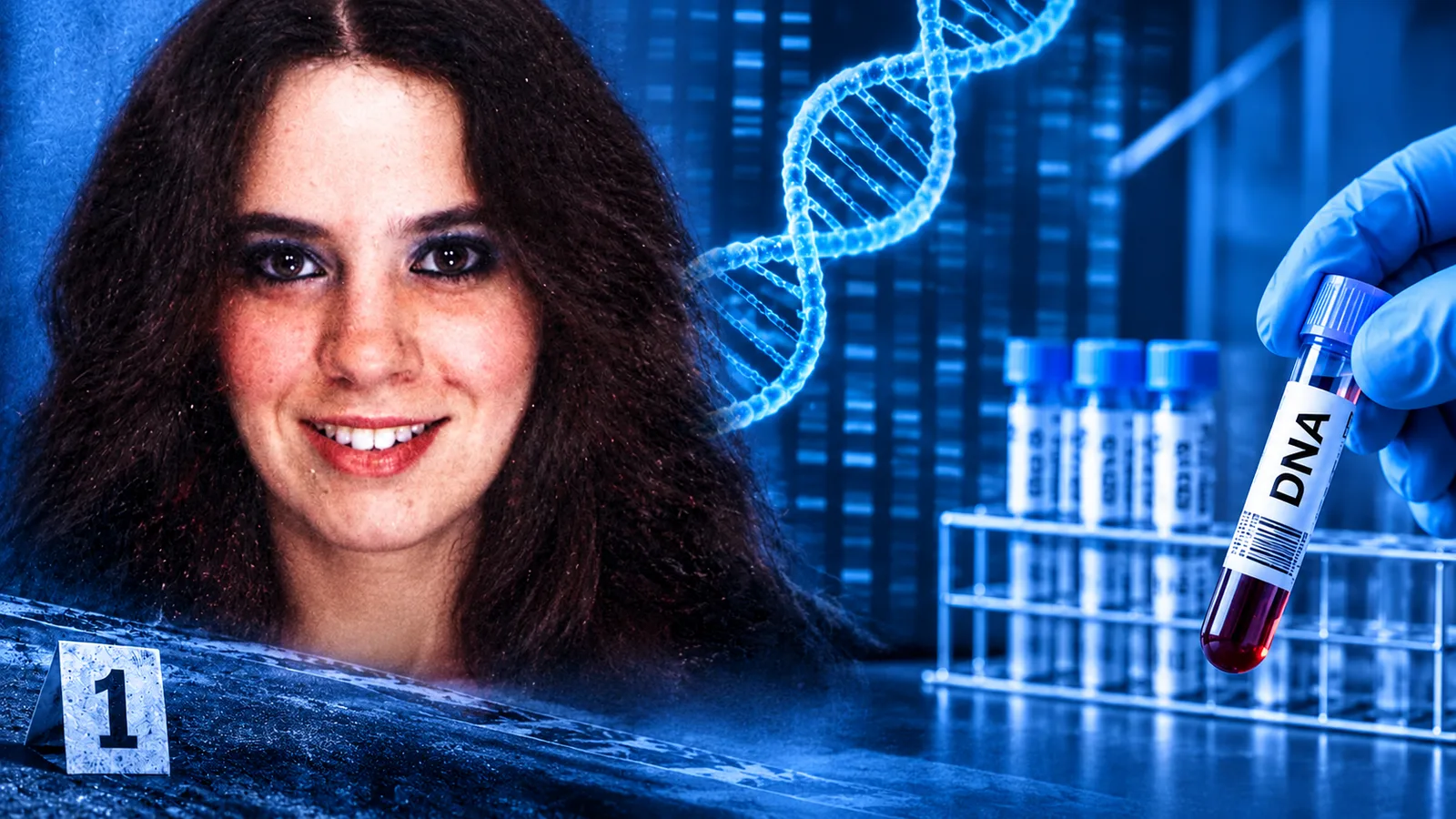
Virginia Beach Police Department has used advanced DNA phenotyping technology to generate a facial reconstruction of an unidentified woman whose body was discovered in 1976, hoping that the new forensic development will help establish her identity.
 The Virginia Beach Police Department (VBPD), in collaboration with the Office of the Chief Medical Examiner (OCME) and Virginia-based DNA technology company Parabon NanoLabs, has developed a facial composite of an unidentified murder victim whose remains were discovered nearly 50 years ago.
The investigation is focused on identifying a woman whose body was recovered from the water near the First Island of the Chesapeake Bay Bridge-Tunnel on May 30, 1976. Due to the condition of the remains, investigators were unable to establish her identity at the time. The Office of the Chief Medical Examiner subsequently classified the death as a homicide and estimated that the woman had been killed within 48 hours before her body was discovered.
Despite investigative efforts spanning several decades, the victim remains unidentified.
DNA Phenotyping Used to Reconstruct Facial Appearance
To generate fresh investigative leads, authorities partnered with Parabon NanoLabs, a company specialising in advanced genetic analysis and forensic DNA phenotyping.
DNA phenotyping is a forensic technique that analyses genetic information to predict certain physical characteristics of an unidentified individual. These may include genetic ancestry, eye colour, hair colour, skin pigmentation, freckling and aspects of facial appearance.
Using genetic material recovered during the investigation, the company developed a predicted physical profile of the victim. Forensic artists then combined the predicted characteristics to produce a facial composite illustrating how the woman may have appeared.
The composite depicts the victim at approximately 25 years of age, using an assumed average Body Mass Index (BMI) of 22. These reference values were selected to create a standardised visual representation because DNA analysis cannot independently establish a person's exact age or body weight.
Physical Description of the Unidentified Victim
According to investigators, the woman was believed to be between 35 and 45 years old at the time of her death. She was approximately 5 feet 6 inches tall and weighed between 135 and 145 pounds.
A distinctive identifying feature was a scar measuring approximately five inches on the back of her right thigh. Medical examination also indicated that she had given birth at least once.
Authorities are encouraging members of the public to examine the newly generated facial composite and physical description, particularly individuals who may recognise the victim or have information about someone who disappeared around the relevant period.
DNA Phenotyping Is Not an Exact Facial Identification
The Virginia Beach Police Department has clarified that the generated facial composite is a scientific approximation rather than an exact representation of the victim's appearance.
Although DNA phenotyping can provide useful information about genetically influenced physical characteristics, several aspects of an individual's appearance cannot be reliably predicted through DNA alone.
Factors such as smoking, diet, alcohol consumption, hairstyles and other environmental influences may affect actual appearance. Features such as scars also cannot be established through genetic prediction.
Consequently, investigators are treating the composite as an investigative lead to generate public recognition rather than definitive proof of identity.
Authorities Appeal for Public Assistance
The Virginia Beach Cold Case Squad is requesting assistance from anyone who recognises the composite, recalls a missing woman matching the description or possesses information connected with the homicide.
Information can be provided through the following channels:
-
Virginia Beach Cold Case Squad Tipline: 757-385-4241
-
Crime Solvers: 1-888-LOCK-U-UP
-
Anonymous online tips: P3Tips.com
The department has also highlighted the scale of unidentified-person investigations across the United States, where more than 15,500 cases remain unresolved.
Relatives of missing persons may voluntarily submit Family Reference Samples for comparison with DNA profiles obtained from unidentified human remains. Authorities have stated that these reference profiles are legally protected and restricted to the identification process.
Forensic Significance
This investigation demonstrates the growing role of forensic DNA phenotyping in cold-case investigations. Traditional DNA profiling primarily assists investigators in comparing biological evidence with known reference samples or available databases. DNA phenotyping offers another investigative approach by predicting selected physical characteristics from genetic material when conventional identification methods have not produced a result.
Although the technique cannot independently establish identity, it can help investigators develop new leads, narrow investigative possibilities and encourage recognition through public appeals.
The Virginia Beach investigation illustrates how advances in forensic genetics may provide renewed opportunities to identify unidentified homicide victims, even decades after their deaths.