
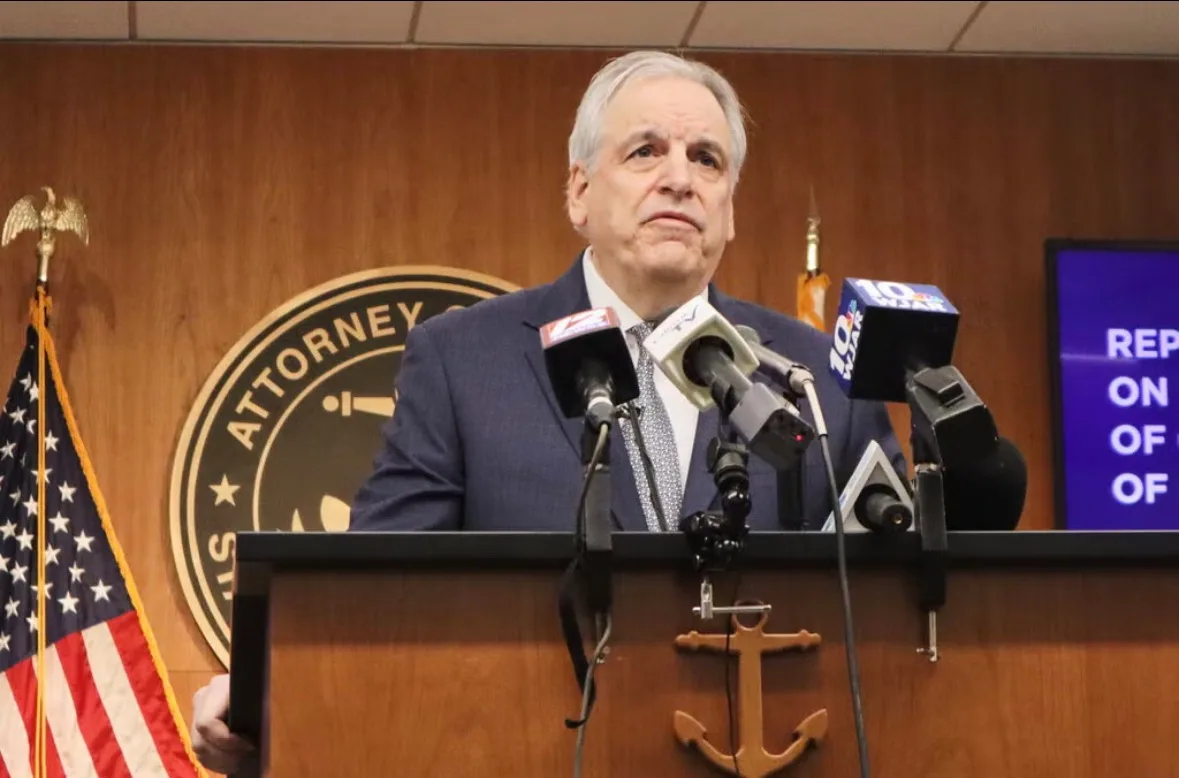
New forensic DNA analysis has helped investigators identify a suspect in the 1985 killing of 22-year-old Hillary Hellewell in Newport, Rhode Island.
A decades-old homicide investigation in the United States has taken a major step forward after advanced forensic DNA analysis led to the arrest of a 61-year-old man in connection with the 1985 murder of Hillary Hellewell. Authorities announced on October 6, 2026, that William Morton had been charged with murder following a renewed investigation by the Rhode Island Attorney General’s Office and Newport Police Department, with assistance from the Smithfield Police Department.
Hellewell’s body was discovered on a sidewalk in Newport on May 19, 1985. Investigators collected biological evidence during the original investigation, but the case remained unsolved for decades. DNA analysis conducted in 2004 generated a profile from biological material recovered from the victim’s clothing. The profile was subsequently entered into the FBI’s Combined DNA Index System (CODIS), but it initially produced no match.
Advanced DNA Analysis Reopens the Investigation
The investigation was reopened in 2023, when authorities employed newer forensic DNA analysis techniques and investigative methods to re-examine the available evidence. The renewed examination helped investigators develop leads that eventually focused attention on Morton.
According to investigators, DNA evidence and subsequent investigative work played a significant role in identifying him as a potential suspect. Authorities reportedly obtained a DNA sample from a discarded water bottle associated with Morton and compared it with the biological evidence preserved from the original crime scene. The comparison produced a match, providing a significant development in the decades-old investigation.
The case highlights the value of preserving biological evidence and revisiting unsolved crimes as forensic technologies advance. Evidence that could not identify a suspect through earlier investigative methods may yield new leads when examined using improved analytical techniques.
The Role of Forensic Science in Cold Case Investigations
This investigation demonstrates how forensic DNA profiling can contribute to criminal investigations long after a crime has occurred. The ability to preserve biological evidence, develop DNA profiles and compare them with newly obtained reference samples can help investigators revisit cases that once appeared to have reached an investigative dead end.
The case also underscores the importance of collaboration between forensic specialists, law enforcement agencies and prosecutors. However, DNA evidence must be interpreted alongside other investigative findings and evaluated through appropriate legal procedures.
Morton was arraigned on October 6, 2026, and is being held without bail. A further court appearance is scheduled for October 20, 2026. The investigation remains ongoing, and the charge is an allegation; the accused is presumed innocent unless proven guilty in court.