
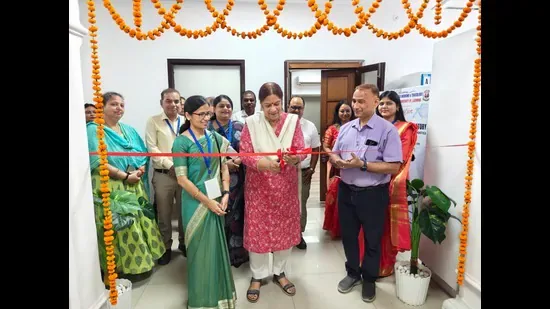
Lucknow,UP | King George’s Medical University (KGMU), Lucknow, has inaugurated Uttar Pradesh’s first DNA fingerprinting laboratory established within a medical institution. The facility, named the DNA Fingerprinting Laboratory-Forensic Genetics and Molecular Diagnostics, has been set up in the university’s Department of Forensic Medicine and Toxicology to strengthen forensic investigations, scientific research, and molecular diagnostics.
The laboratory is expected to support DNA-based identification of unknown bodies, missing persons, and victims of disasters. It may also assist in cases involving paternity disputes and suspected newborn exchanges in hospitals. According to university officials, the facility could further contribute to medical research, including chimerism analysis following bone marrow transplantation.
The inauguration was conducted by KGMU Vice-Chancellor Professor Soniya Nityanand on October 23. A two-day hands-on workshop on forensic DNA profiling was also organised on October 23 and 24, bringing together researchers, postgraduate medical residents, faculty members, and forensic experts from different institutions.
The training programme covers essential laboratory techniques, including DNA extraction, polymerase chain reaction (PCR) amplification, short tandem repeat (STR) profiling, and interpretation of genetic analyser results. These methods form an important part of modern forensic DNA analysis and can assist experts in establishing biological associations and identifying individuals from biological evidence.
Professor Anoop Kumar Verma, Head of the Department of Forensic Medicine and Toxicology, emphasised the importance of DNA profiling in contemporary forensic investigations. Associate Professor Dr Anshu Priya highlighted the laboratory’s proposed focus on research, innovation, education, training, and STR-based molecular diagnostics.
The initiative is expected to strengthen forensic genetics research and practical training in Uttar Pradesh. By bringing DNA profiling capabilities into a medical university, KGMU aims to expand opportunities for collaboration between forensic medicine, molecular biology, and clinical research.
The laboratory represents a significant institutional development for forensic science education and research in the state, particularly in areas involving human identification, missing-person investigations, disaster victim identification, and the scientific examination of biological evidence.