
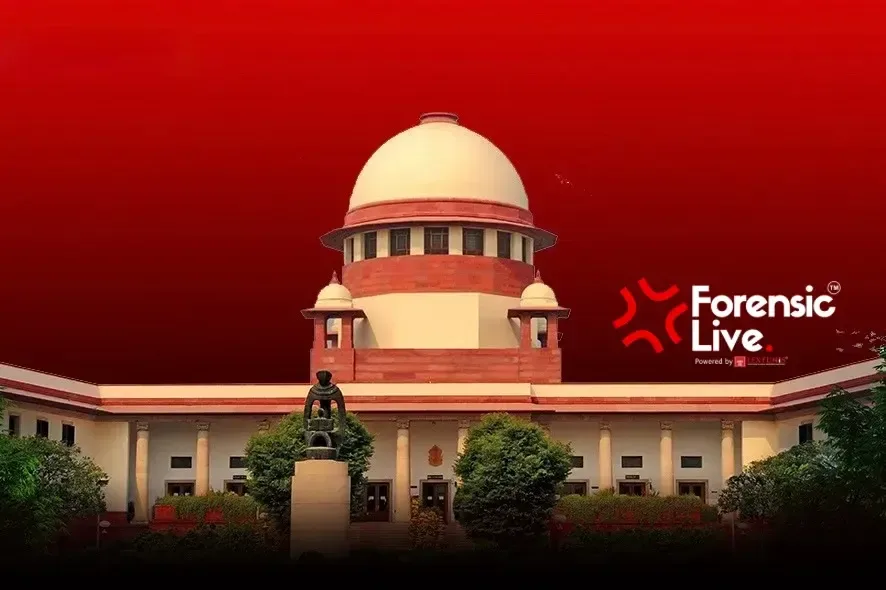
The Supreme Court of India has acquitted a man convicted in a murder case, holding that disputed WhatsApp messages that could not be reliably attributed to their alleged sender were insufficient to establish guilt. The Court also found gaps in the prosecution’s circumstantial evidence, including the failure to connect recovered bloodstains and alleged weapons to the deceased.
A Bench of Justice Manoj Misra and Justice Vijay Bishnoi allowed the appeal filed by Kusumlal Sao in Kusumlal Sao v. State of Chhattisgarh, setting aside his conviction under Sections 302 and 201 of the Indian Penal Code, 1860.
Background of the Case
The case arose after a man was found dead in an open field on 9 February 2019, with his motorcycle and a rope nearby. Although the matter was initially reported as a possible accidental death, the post-mortem examination indicated homicidal death, leading the police to register a case against unknown persons.
During the investigation, police examined mobile phones belonging to two prosecution witnesses. A WhatsApp message allegedly exchanged between them on the night of 7–8 February 2019 suggested that Sao had fought with the deceased before his death.
 The prosecution also relied on the alleged recovery of an iron rod, a screwdriver, a bloodstained shirt and bloodstained soil. The trial court convicted Sao, and the High Court upheld the conviction.
However, the witnesses did not support the prosecution’s account of the alleged fight. The purported sender denied sending the WhatsApp message, and neither witness claimed to have witnessed the incident.
Supreme Court on WhatsApp Evidence
The Supreme Court observed that proving a message was transmitted between two mobile phones does not, by itself, establish the truth of its contents or prove the accused’s involvement in a crime.
The Bench examined whether the messages could be treated as relevant evidence under Sections 6 and 7 of the Indian Evidence Act, 1872. Section 6 concerns facts forming part of the same transaction, while Section 7 addresses facts connected with facts in issue as their occasion, cause or effect.
The Court held that the prosecution had not established when the deceased died through substantive evidence. Consequently, it could not establish that the messages were sent at or about the time of the alleged occurrence so as to form part of the same transaction.
The Court further noted that the alleged sender denied sending the message and both witnesses denied witnessing the incident. Questions concerning who authored the message and whether its contents were based on personal knowledge, hearsay or assumptions remained unanswered.
The Bench concluded that the messages did not prove that the deceased had been at the accused’s house or that Sao had assaulted him. At most, the messages created suspicion, which was insufficient to sustain a criminal conviction.
Forensic Evidence and Recovery of Articles
The Court also scrutinised the prosecution’s reliance on alleged recoveries from the accused’s house.
There were inconsistencies in the seizure witnesses’ accounts regarding the recovery of bloodstained soil. One witness cast doubt on whether the soil had been collected from the accused’s house or from the open field where the body was discovered.
More importantly, the bloodstains could not be scientifically linked to the deceased. No matching DNA profile was available to establish that the recovered blood belonged to the victim. Similar evidentiary shortcomings affected the alleged recovery of the iron rod and screwdriver.
The Court found that these circumstances did not establish a reliable connection between the accused and the crime.
Circumstantial Evidence Must Establish Guilt
The prosecution’s case depended substantially on circumstantial evidence. The Supreme Court reiterated that each circumstance must be established by reliable evidence and that the circumstances, taken together, must form a complete chain pointing to the accused’s guilt while excluding reasonable alternative explanations.
The Bench also considered the possibility that the deceased’s injuries could have resulted from a fall from a moving motorcycle. In the absence of reliable evidence establishing the alleged fight, the accused’s unexplained injuries could not independently prove his involvement in the death.
Final Decision
Finding that the prosecution had failed to establish a complete and reliable chain of circumstances, the Supreme Court allowed the appeal and set aside the judgments of the lower courts. Sao was acquitted of the charges, with directions for his release unless required in another case.
The ruling highlights an important evidentiary distinction in criminal investigations: extracting a digital message from a device is not the same as proving its authorship, the source of its information or the truth of its contents. Likewise, recovering a bloodstained object does not establish its connection to a crime unless the surrounding evidence reliably supports that inference.
For digital forensic investigators and criminal justice professionals, the decision underscores the importance of corroborating electronic communications, examining the provenance of digital evidence and ensuring that forensic findings support-not merely suggest-the prosecution’s case.