
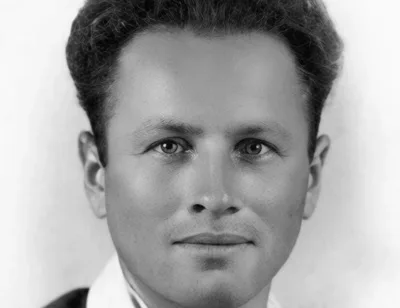
Advanced DNA analysis and international genealogical research have identified an unidentified man who died in Melbourne, Australia, in 2004, as Chemia Kwiat, a Polish-born migrant whose identity remained unknown for over 22 years.
MELBOURNE, AUSTRALIA
An unidentified man who died in Carlton, Melbourne, in May 2004 has finally been identified as Chemia Kwiat, born in Warsaw, Poland, in 1918. The identification was formally confirmed in September 2026 following a coronial process, bringing a decades-long investigation to a significant milestone.
Known for years as the “Carlton Man,” the individual died of natural causes without identification documents. Early investigative efforts, including conventional DNA profiling and mitochondrial DNA analysis, failed to establish his identity.
The breakthrough came through forensic investigative genetic genealogy (FIGG), a technique that combines DNA analysis with genealogical research to identify individuals through biological relatives and historical family records.
When Conventional DNA Methods Failed
The Victorian Institute of Forensic Medicine (VIFM) initiated a collaborative evaluation of forensic investigative genetic genealogy in 2019 to explore new approaches for identifying unidentified human remains.
As part of this work, the Carlton Man’s DNA was analysed using a microarray to generate a dense set of genetic markers suitable for genealogical comparisons.
In late 2019, investigators uploaded the resulting profile to GEDmatch, a genealogy database, and obtained a potential relative match sharing approximately 200 centimorgans (cM) of DNA. Although the result provided an investigative lead, it was insufficient to establish the man's identity.
A more significant development followed in mid-2020, when a search of the FamilyTreeDNA database produced a match sharing approximately 616 cM. This indicated a potentially closer biological relationship and helped investigators narrow their search.
However, identifying the individual required much more than comparing DNA matches. Researchers had to reconstruct family trees, examine historical records and account for migration, name changes and gaps in documentation.
International Genealogical Investigation
The investigation involved Dr Dadna Hartman and Dr Runa Daniel of VIFM, working with Dr Colleen Fitzpatrick of Identifinders International.
The team examined civil registration records, immigration documents, electoral rolls, newspaper notices, archival records and information supplied by relatives. Their research crossed several countries, including Poland, Israel, the United States, Greece, Italy, Germany and Australia.
The investigation was complicated by incomplete historical records and the loss of family documents during the Holocaust. Researchers also had to account for endogamy, a pattern of marriage within a community that can affect the interpretation of shared DNA.
By combining genetic matches with documentary evidence, investigators traced the relevant family connections to Chemia Kwiat, who had emigrated to Melbourne after the Second World War.
Historical records placed him in Carlton North. The research suggested that he was the only close relative in the relevant family branch whose later life and death had not been accounted for.
An investigative report completed in October 2021 concluded that the evidence supported Kwiat as the likely identity of the Carlton Man. Further verification and formal procedures were required before the identification could be finalised.
In September 2026, following the coronial process, the man was formally identified as Chemia Kwiat.
Forensic Significance
The case highlights the potential of forensic investigative genetic genealogy to resolve unidentified-person cases when conventional DNA profiling and database searches produce no definitive match.
Unlike traditional DNA profiling, which often relies on direct comparisons with known individuals or existing forensic databases, FIGG can identify investigative leads through genetic relationships with more distant relatives. Investigators then combine these leads with documentary research and independent verification.
The case also demonstrates why DNA matches must be interpreted cautiously. Shared genetic material does not establish identity on its own, and factors such as endogamy, incomplete records and complex family relationships can complicate genealogical analysis.
Importantly, FIGG should be treated as an investigative tool rather than a standalone confirmation of identity. Appropriate safeguards, respect for database policies and privacy, and independent corroboration remain essential.
Restoring an Identity Through Forensic Science
For more than two decades, the Carlton Man remained unidentified despite earlier investigative efforts. His eventual identification resulted from the combined work of forensic scientists, genetic genealogists and historical researchers.
The case illustrates how advances in DNA technology can reopen investigations once considered difficult to resolve. It also underscores a fundamental principle of forensic identification: behind every unidentified-person case is an individual whose identity and history deserve to be recovered.
The identification of Chemia Kwiat demonstrates that persistent, multidisciplinary investigation can produce answers even when decades have passed and historical records are incomplete.