
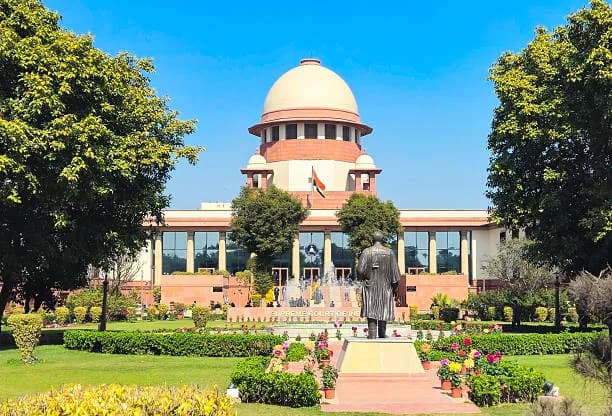
The Supreme Court has held that an accused must be given an opportunity of being heard before a court takes cognizance of an offence under the Bharatiya Nagarik Suraksha Sanhita, 2023 (BNSS), even where the original complaint was filed before the BNSS came into force.
A Bench comprising Justice J.B. Pardiwala and Justice K. Vinod Chandran ruled that the relevant date for determining the applicability of the BNSS safeguard is when the court actually applies its judicial mind and takes cognizance not merely when the complaint or protest petition was filed.
Cognizance Taken After BNSS Came Into Force
The case arose from a criminal proceeding in Uttar Pradesh. An FIR had been registered in June 2022, followed by a police closure report. The complainant subsequently filed protest petitions, and the matter remained pending before the trial court.
Although the complaint proceedings had originated under the earlier Code of Criminal Procedure, the Special Judge eventually passed an order on June 3, 2026, finding a prima facie case and taking cognizance of the alleged offences.
The accused challenged the order before the Supreme Court, arguing that since cognizance was taken after the BNSS came into force on July 1, 2024, the safeguard contained in Section 223 of the BNSS was applicable.
Judicial Application of Mind Determines Cognizance
The Supreme Court examined the earlier proceedings and observed that the trial court had not actually taken cognizance when it initially dealt with the protest petition.
Instead, the court had directed the complainant to lead evidence. Statements of the complainant and other witnesses were subsequently recorded in March 2024.
According to the Supreme Court, it was only in the later order dated June 3, 2026, that the court applied its judicial mind, found a prima facie case and proceeded to take cognizance.
The Court therefore treated June 3, 2026, as the relevant stage for determining the applicability of the BNSS.
Accused Entitled to Hearing Before Cognizance
Section 223 of the BNSS contains a proviso requiring the accused to be given an opportunity of being heard before cognizance is taken in a complaint case.
The Supreme Court relied on its earlier reasoning in Parvinder Singh v. Directorate of Enforcement, where it had emphasized that cognizance involves the application of judicial mind.
The Court noted that under the BNSS, there is an additional statutory requirement to hear the accused before exercising that judicial mind in a complaint case.
Therefore, the fact that the original complaint or protest petition had been filed before July 1, 2024, did not by itself mean that the proceedings would continue entirely under the old CrPC framework.
Supreme Court Modifies Trial Court Order
The Supreme Court set aside the portion of the June 3, 2026 order in which the Special Judge had found a prima facie case and taken cognizance.
However, the Court confined the order to a “summons simplicitor” and directed the accused to appear before the trial court within one month.
The trial court was thereafter directed to hear the matter and pass appropriate orders in accordance with law.
The Supreme Court clarified that its decision did not express any view on the merits of the allegations.
Case Details
Case: Umar and Anr. v. State of Uttar Pradesh & Anr. Bench: Justice J.B. Pardiwala and Justice K. Vinod Chandran Key Provision: Section 223, Bharatiya Nagarik Suraksha Sanhita, 2023 Subject: Cognizance, right to hearing, BNSS and criminal procedure
Key Takeaway
The ruling reinforces that the date on which a court actually applies its judicial mind and takes cognizance can be crucial in determining whether the BNSS applies. A complaint filed under the earlier CrPC regime does not automatically prevent the accused from receiving safeguards introduced by the BNSS when cognizance is taken after the new law has come into force.