
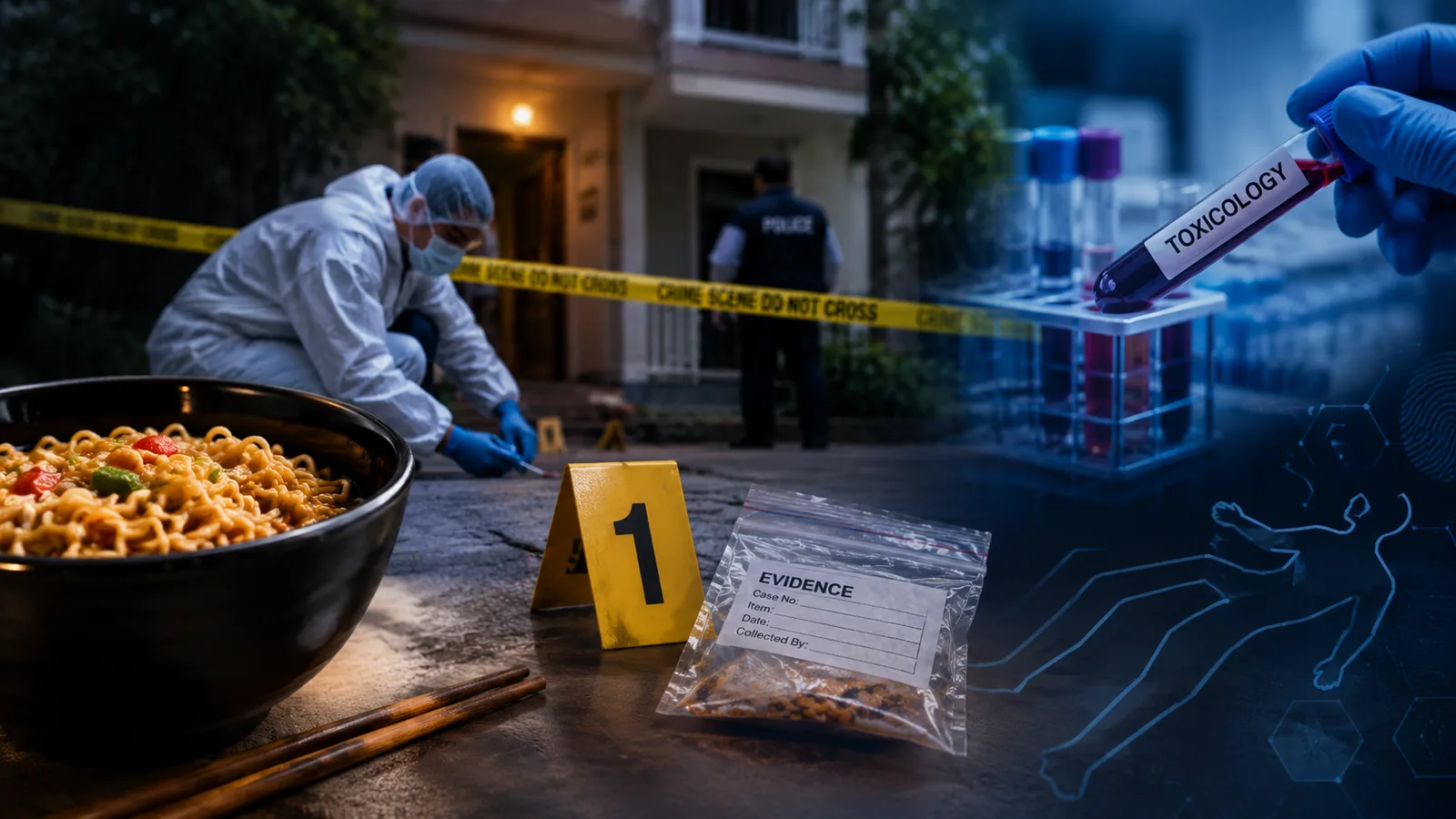
Greater Noida | A forensic investigation is underway after five members of a family, including three children, were found dead at their residence in Nagla Shri Padam village in the Rabupura area of Greater Noida, Uttar Pradesh. Although initial reports pointed towards possible food poisoning after the family reportedly ate noodles the previous night, officials have indicated that poisoning and other possible causes must be investigated. The exact cause of death remains unconfirmed.
The deceased have been identified as Mahesh (37), his wife Lalita (35), and their children Laddu (11), Mishti (7) and Sakshat (3).
Forensic Team Examines the Scene
Police, forensic personnel and Food Safety Department officials reached the scene after the deaths were reported on Saturday morning. The bodies were sent for post-mortem examinations, while investigators began examining the circumstances surrounding the incident.
According to preliminary accounts, the family had eaten dinner at approximately 10–10:30 pm on Friday. The incident came to light the following morning when one of the children did not wake up.
The reported interval between the last meal and the discovery of the bodies has become an important aspect of the investigation. However, the timing alone cannot establish whether the deaths resulted from foodborne toxins, another poisonous substance or an unrelated cause.
Food Poisoning or Deliberate Poisoning? Scientific Evidence Will Be Crucial
The initial suspicion of food poisoning arose after neighbours and relatives reportedly stated that the family had eaten noodles before going to sleep. However, subsequent reporting quoted a Food Safety Department official as saying that an examination of food packets had not revealed anything suspicious. The official also raised concerns about the absence of symptoms commonly associated with food poisoning.
These preliminary observations do not conclusively exclude foodborne poisoning or establish deliberate poisoning. Many toxic substances can produce different clinical effects, and the absence of visible symptoms cannot independently determine the cause of death.
The investigation will therefore depend on the findings of post-mortem examinations and appropriate laboratory analyses.
Key Forensic Examinations in the Case
Several scientific procedures may help establish the cause and manner of death:
-
Forensic toxicology: Analysis of biological samples, including blood, urine, vitreous humour and internal organs where appropriate, to detect and identify potentially toxic substances.
-
Food and kitchen-item analysis: Examination of any recovered food remnants, noodles, beverages, cooking ingredients, utensils and containers for relevant toxic substances or microbial contamination.
-
Post-mortem examination: Assessment of internal organs, pathological findings and other evidence to identify possible causes of death and guide further laboratory testing.
-
Scene examination: Documentation of the location and condition of the bodies, food preparation areas and other relevant objects, with proper collection and preservation of exhibits.
-
Timeline reconstruction: Correlation of the family's last known activities, reported food consumption, onset of any symptoms and the discovery of the bodies with medical and laboratory findings.
These are relevant investigative avenues; the results of these examinations have not yet been established publicly.
Chain of Custody and Laboratory Reliability
Given that five deaths occurred within the same household, preserving the integrity of physical and biological evidence will be essential. Investigators must maintain proper documentation of sample collection, packaging, sealing, transportation and laboratory receipt to minimise contamination and preserve evidentiary value.
Where poisoning is suspected, the selection of appropriate samples and analytical methods is particularly important. A negative result for one substance does not exclude every possible toxin, while detecting a substance does not automatically establish that it caused the deaths. Laboratory findings must be interpreted alongside autopsy observations, case history and other evidence.
What Happens Next?
The investigation remains ongoing, and the precise cause of death has not been confirmed. Post-mortem findings, toxicological examinations and other scientific analyses are expected to help investigators determine whether the deaths resulted from accidental exposure, foodborne illness, deliberate poisoning or another cause.
Until these findings become available, the reported consumption of noodles and allegations concerning possible domestic disputes must be treated as investigative leads rather than proof of causation or criminal responsibility.